Архитектурные молдинги используются для придания внутренним поверхностям завершенного вида, но они не ограничиваются только декоративными планками. В отелях, квартирах, офисах, магазинах и при проведении ремонтных работ молдинги помогают контролировать переход между потолками, стенами, полами, панелями и проемами. Они делают углы более аккуратными, разделяют участки стен, скрывают неровности и позволяют подрядчикам выполнять отделку нескольких помещений с сохранением единого визуального стандарта.
Для покупателей B2B вопрос заключается не только в том, какой стиль выглядит лучше. Важно, какой тип молдинга подходит для места установки, размера профиля, материала, цветовой гаммы, способа упаковки и повторяющейся планировки помещения. Карнизы, плинтусы, переходники и другие профили решают разные задачи на объекте.
ХУАХОНГ ДЕКОР Предлагаются профили из полистирола для потолочных переходов, компоновки каркасов стен, отделки стен и полов, а также обработки кромок. Покупатели также могут ознакомиться с более широким ассортиментом. Формование Ассортимент включает в себя профили для потолочного карниза, стенового молдинга, плинтуса и отделочных элементов, необходимые для выполнения одного проекта.
Почему архитектурные лепные элементы важны в коммерческих интерьерах?
Архитектурные элементы отделки имеют значение, поскольку коммерческие интерьеры оцениваются по деталям. Даже качественные панели, краска или напольное покрытие будут выглядеть некачественно, если линия потолка, каркас стен или край пола неровные. Это особенно заметно в отелях и квартирах, где один и тот же дизайн повторяется во многих комнатах.
Формы определяют переходы между поверхностями.
В большинстве помещений имеется несколько стыков поверхностей. Стены соединяются с потолком. Стены соединяются с полом. Стеновые панели соединяются с окрашенными участками. Дверные проемы пересекают длинные коридоры. Без подходящих лепных элементов эти стыки могут выглядеть незавершенными.
Карнизы обычно используются в местах соединения стены и потолка. Настенные молдинги создают рамки или декоративные зоны на гладких стенах. Плинтус закрывает линию от стены до пола. Редукторные и кромочные планки помогают компенсировать изменение толщины материала или наличие открытых кромок. Для подрядчиков эти детали сокращают объем доработок и упрощают отделку каждой комнаты на одном уровне.
Декоративные молдинги улучшают внешний вид повторяющихся элементов отделки помещений.
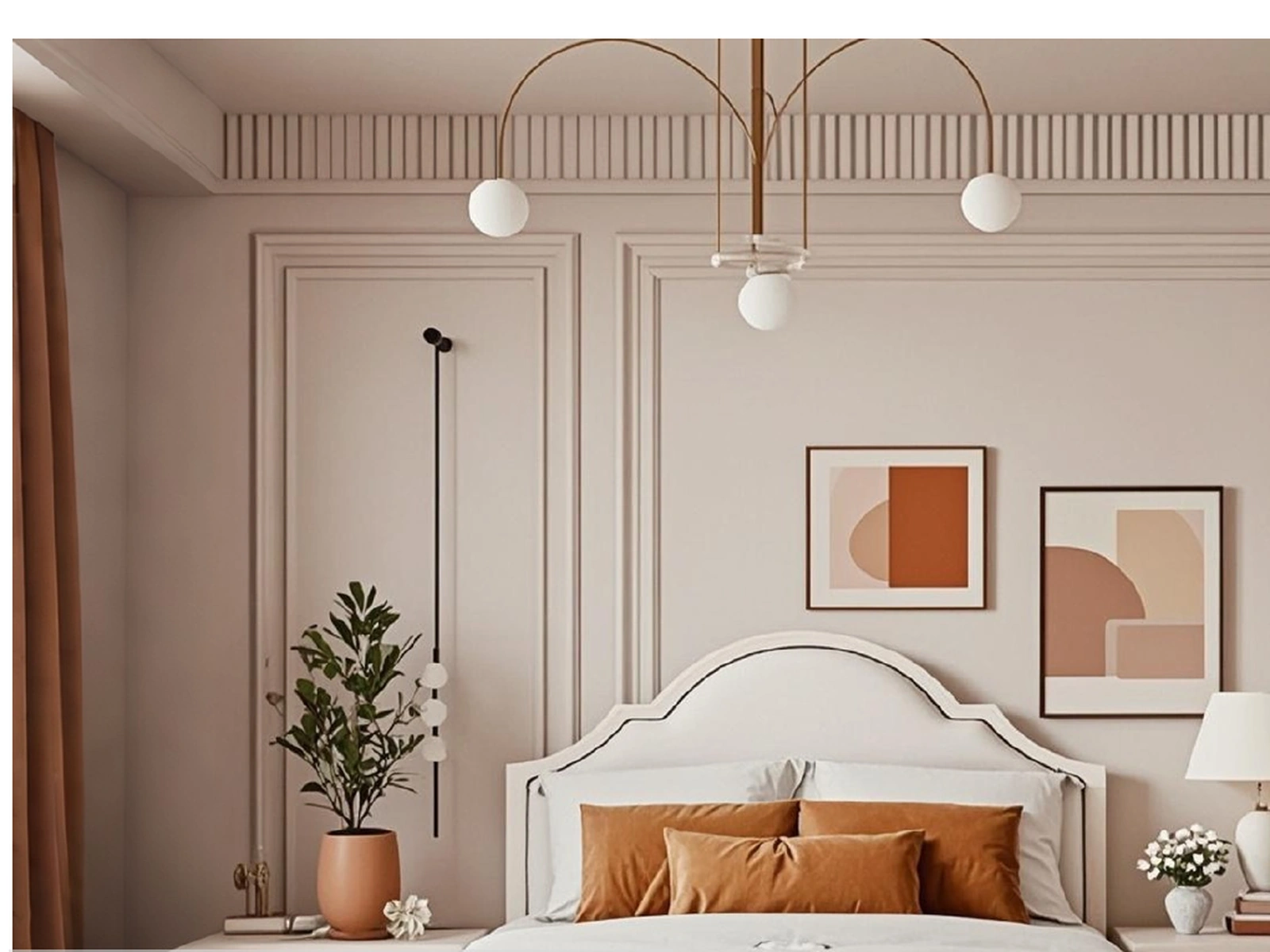
Простая стена может быть приемлема в небольшой комнате, но она может выглядеть пустой в коридоре отеля, в прихожей квартиры или в выставочном зале. Настенный молдинг добавляет ритм и пропорции, не перестраивая стену. Карниз придает линии потолка более четкую форму, особенно вблизи светильников, штор или стеновых панелей.
Вот почему архитектурные молдинги полезны при ремонтных работах. Они улучшают видимую отделку, при этом упрощая строительство по сравнению с полной заменой стен. Для покупателей, которые осматривают много комнат, единообразие важнее, чем один привлекательный образец.
Для крупных заказов необходимы практичные профили.
Выбор профиля влияет не только на внешний вид. Он также влияет на резку, установку, упаковку, хранение и подбор материала при повторном заказе. Профиль лепнины может хорошо выглядеть в демонстрационном образце, но создать проблемы, если заказ включает несколько типов помещений или цветовых групп.
Профильный молдинг из полистирола часто используется для внутренней отделки, поскольку он легкий и практичный для ремонтных работ. Покупателям все равно необходимо уточнить ширину, высоту, длину, цвет и форму профиля. Длина в 2,9 м может помочь в планировке помещения, но подрядчикам все равно придется рассчитывать отходы вокруг углов, дверей, окон и коротких участков стен.
Какие виды архитектурных лепных элементов наиболее распространены?
Самый простой способ сравнить архитектурные молдинги — это определить их место установки. Для перехода от потолка к стене требуется другой профиль, чем для каркаса стены. Шов между стеной и полом требует иного подхода, чем декоративная линия стены.
Карнизы для стыков потолков
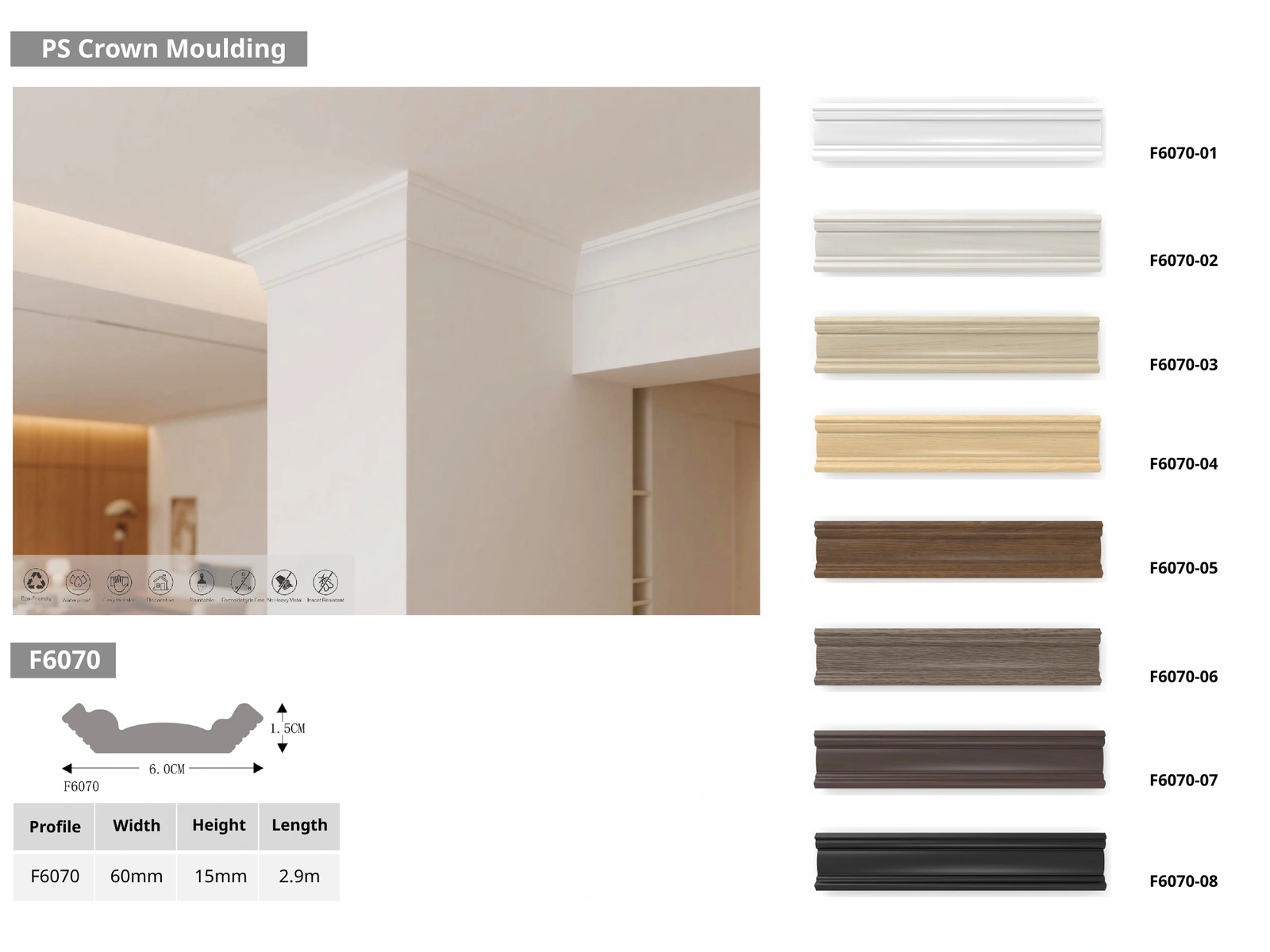
Карниз устанавливается в месте соединения стены и потолка. Он смягчает верхний угол и придает помещению более завершенный вид. В гостиничных номерах, апартаментах с обслуживанием, виллах, ресторанах и зонах приема гостей карниз может добавить завершающую линию, не перегружая дизайн стены.
ХУАХОНГ ДЕКОР PS Корона Линейка профилей может использоваться для зон перехода между потолками. Профиль F6070 в каталоге продукции имеет ширину 60 мм, высоту 15 мм и длину 2,9 м. Перед оптовым заказом карнизов из полистирола покупателям следует уточнить высоту потолка, расположение углов, положение светильников, детали коробов для штор, а также будет ли использоваться один и тот же профиль во всех комнатах.
Настенные молдинги создают рамки и декоративные зоны.
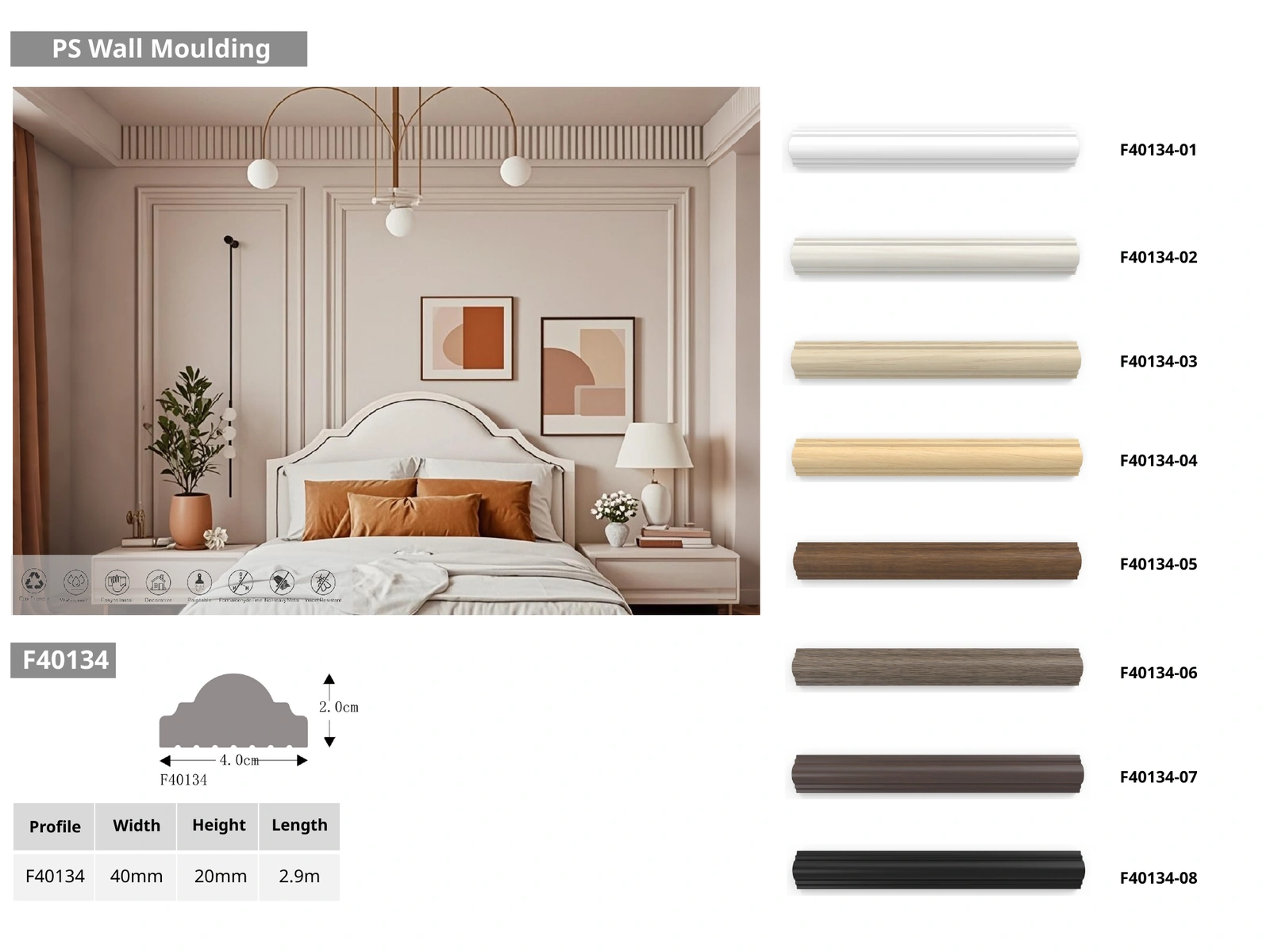
Настенный молдинг используется непосредственно на поверхности стены. Он может создавать композиции, напоминающие рамки для картин, бордюры фоновых стен, ритм коридора или декоративные линии вокруг зон расстановки мебели. По сравнению с цельными стеновыми панелями, настенный молдинг более универсален, поскольку его можно размещать в соответствии с планировкой стены.
ХУАХОНГ ДЕКОР PS стены Эта категория представляет собой универсальный вариант для различных вариантов отделки стен. Профиль F40134 в прилагаемом каталоге имеет ширину 40 мм, высоту 20 мм и длину 2,9 м. Эти размеры влияют на пропорции рамы, схему раскроя и ритм монтажа, поэтому их следует проверить перед тем, как переходить к оптовому заказу.
Отделка кромок плинтуса и переходника
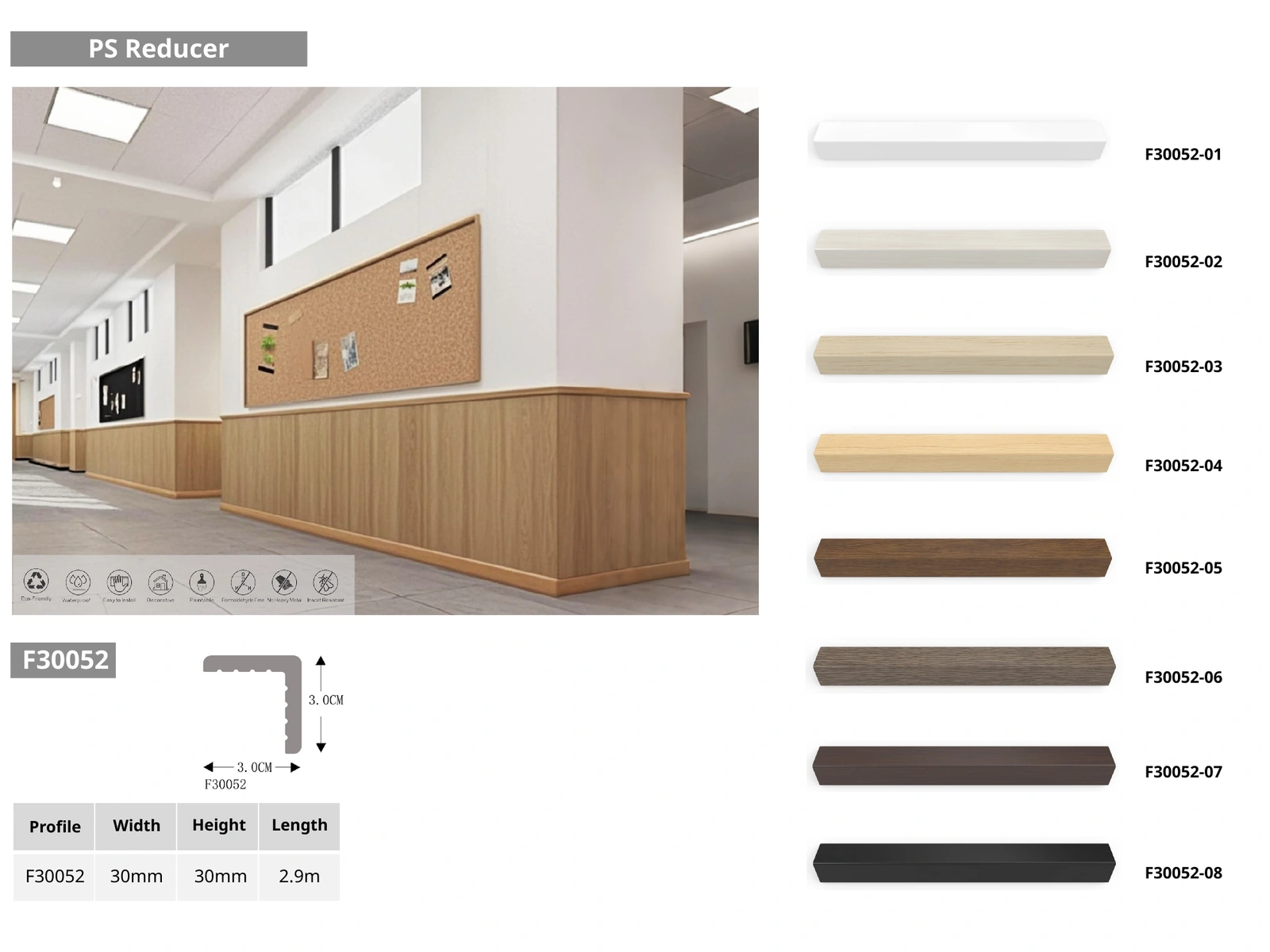
Плинтусы и переходные профили являются вспомогательными элементами в полном комплекте лепных элементов. Плинтусы обеспечивают стык стены и пола, закрывают неровные нижние края и помогают защитить нижнюю часть стены. Переходные профили помогают в тех случаях, когда требуется более плавный переход между полом, панелью или кромкой.
ХУАХОНГ ДЕКОР ПС ДОСКА ПОЛЕНИЯ F8057 Имеет ширину 80 мм, высоту 15 мм и длину 2,9 м. Редуктор PS F30052 имеет ширину 30 мм, высоту 30 мм и длину 2,9 м. Он служит дополнением к карнизам и стеновым молдингам, завершая отделку нижних частей стен и кромок в проекте.
Как покупателям следует подбирать типы молдингов в зависимости от площади помещения?
Выбирать архитектурные молдинги, ориентируясь только на название изделия, рискованно. Один и тот же профиль может выглядеть гармонично в комнате с высокими потолками, но слишком массивно в небольшой гостевой комнате. Покупателям следует подбирать каждый тип молдинга в соответствии с фактической площадью стены, высотой потолка, длиной коридора и назначением помещения.
Высокие потолки требуют сбалансированных линий карниза.
Высота потолка влияет на внешний вид потолочного карниза. В низком помещении слишком широкий профиль может визуально опустить потолок. В высоком помещении очень тонкая линия может визуально исчезнуть. Покупателям следует проверять образцы вблизи реального цвета стен и потолка, а не только при освещении складского помещения.
Для длинных коридоров необходимы повторяющиеся профили.
В коридорах легко заметить мелкие ошибки. Неравномерное расстояние между элементами, несоответствие размеров или цветовые несоответствия могут повторяться по всей стене. Настенные молдинги могут сделать коридоры менее скучными, но их планировку следует продумать до начала монтажа. Подрядчикам необходимо подтвердить расстояние между дверными рамами, высоту профиля, расстояние вокруг дверей и обработку углов.
Для создания акцентных стен необходим единый ритм.
Для создания более выразительного акцента на стенах за кроватями, стойками регистрации, в зонах просмотра телевизора или выставочных залах часто используются декоративные молдинги. Следует согласовать отделку с цветом стеновых панелей, краски, напольного покрытия и мебели. Простой эскиз поможет избежать слишком перегруженных или, наоборот, слишком пустых рамок.
Что должны проверить подрядчики перед размещением крупных заказов на изготовление молдингов?
Для изготовления больших партий архитектурных молдингов требуется больше подготовки, чем для небольших декоративных изделий. Подрядчику может потребоваться один и тот же профиль для многих комнат, этажей или зданий. Заблаговременное подтверждение размеров, цвета, упаковки и схемы установки позволяет избежать изменений на объекте в дальнейшем.
Размер и длину профиля следует уточнить заранее.
Ширина и высота влияют на визуальный вес. Длина влияет на планы раскроя, упаковку в коробки, хранение и транспортировку. Профили F6070, F40134, F8057 и F30052 от HUAHONG DECOR имеют длину 2,9 м, что помогает покупателям планировать многократную внутреннюю отделку.
Хороший запрос на коммерческое предложение должен включать чертежи помещения, длину стен, высоту потолка, предпочтительный тип профиля, требуемый цвет и предполагаемое количество. Это даст поставщику достаточно информации для обсуждения подходящей комбинации молдингов, вместо того чтобы предлагать один профиль без учета контекста проекта.
Образцы следует проверить с помощью других материалов.
Образец лепнины следует сравнить с поверхностью стены, цветом потолка, напольным покрытием и освещением. Это особенно важно для настенной и потолочной лепнины, поскольку они создают тени. Если над проектом будет работать много субподрядчиков, более простые и повторяемые профили могут уменьшить вариативность на объекте.
Упаковка и маркировка имеют значение на месте.
Длинные профили нуждаются в защите от изгиба, повреждения поверхности и путаницы с разными моделями. Если несколько профилей поставляются вместе, четкая маркировка помогает подрядчикам различать потолочные карнизы, стеновые молдинги, плинтусы и переходники. В проектах с несколькими помещениями коробки с маркировкой по профилю, цвету или партии могут сэкономить время монтажа.
| Тип литья | Общая позиция по проекту | Ключевые моменты, которые следует учитывать покупателям |
| карниз | Переход от стены к потолку | Высота профиля, стиль потолка, соответствие углов. |
| Стеновая литья | Рамки для стен и декоративные зоны | Размер макета, соответствие цветов, повторяющийся профиль |
| Плинтус | Отделка стен и пола | Высота, соответствие напольному покрытию, защита нижней части стены. |
| Редуктор / кромочная обрезка | Переход по краю пола или панели | Соответствие толщины, направление монтажа, отделка. |
Как компания HUAHONG DECOR может помочь в поиске поставщиков архитектурных лепных элементов?
Компания HUAHONG DECOR может помочь в подборе архитектурных молдингов, предлагая семейства профилей, которые позволяют покупателям создать более полный комплект для внутренней отделки. Покупатели, которым необходим подбор продукции, обсуждение образцов или поддержка в поставках для проекта, также могут ознакомиться с ассортиментом компании. Услуга Перед отправкой подробного запроса ознакомьтесь с информацией на этой странице.
Профили PS подходят для проектов внутренней отделки.
Архитектурные профили PS подходят для проектов внутренней отделки, требующих декоративных профилей с контролируемым размером, повторяющимся внешним видом и практичностью в использовании. F6070 может использоваться для перехода между потолочными элементами. F40134 может использоваться для каркасных конструкций стен. F8057 и F30052 могут использоваться для отделки нижних частей стен и кромок, когда проект требует более полного комплекта отделочных элементов.
Для покупателей преимущество заключается в том, что подрядчики могут спланировать помещение как единый комплект: линия потолка, каркас стены, нижний край стены и переходная зона. Это упрощает объяснение, установку и повторный заказ продукта.
Покупатели проекта должны предоставить четкую и подробную информацию.
Следующий шаг — это не просто запрос общего каталога. Покупателям следует указать тип помещения, высоту стен, высоту потолка, длину стен, расположение профиля, желаемый цвет, материал поверхности, предполагаемое количество, требования к упаковке и график доставки.
Для подрядчиков и дистрибьюторов, готовящих заказ на литьевую продукцию, Связаться с нами с чертежами, сметой объемов и требованиями к отделке. Более четкое описание помогает подобрать подходящие архитектурные элементы для проекта до того, как производство, упаковка или доставка на объект станут срочными.
Вывод
Архитектурные молдинги помогают придать коммерческим интерьерам завершенный вид, обеспечивают плавные переходы между поверхностями и позволяют создавать повторяющиеся дизайнерские детали в отелях, квартирах, торговых помещениях, офисах и проектах реконструкции. Карнизы, настенные молдинги, плинтусы и переходные профили решают разные задачи в процессе внутренней отделки.
Для покупателей B2B лучший выбор начинается с определения места применения, размера профиля, материала, цвета, компоновки, упаковки и утверждения образца. Профили PS от HUAHONG DECOR, включая F6070, F40134, F8057 и F30052, предоставляют подрядчикам и дистрибьюторам практичные варианты для создания полного комплекта внутренней отделки. Когда проект включает много помещений или повторяющуюся компоновку, предварительное подтверждение профиля безопаснее, чем решение деталей отделки на месте.
Часто задаваемые вопросы
В1: Какие основные типы архитектурных лепных элементов используются в интерьерах?
A1: К распространенным типам относятся потолочные карнизы, настенные молдинги, плинтусы, переходники, молдинги для стульев, молдинги для картин, наличники и другие профили отделки.
В2: Какой тип молдинга подходит для перехода от стены к потолку?
A2: Карнизы обычно используются в местах соединения стены и потолка, особенно в гостиничных номерах, коридорах и парадных интерьерах.
В3: Что покупателям следует уточнить перед заказом архитектурных молдингов из полистирола?
A3: Покупатели должны подтвердить размер профиля, длину, цвет, утверждение образца, упаковку, количество помещений, схему установки и график доставки.