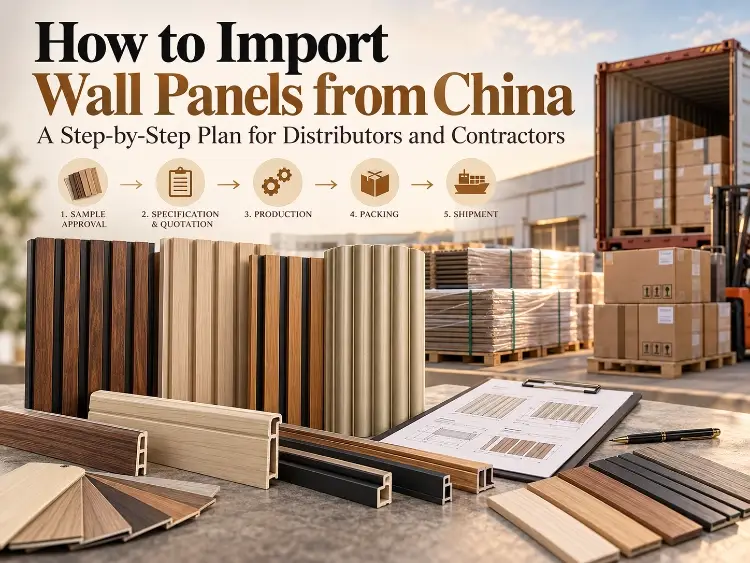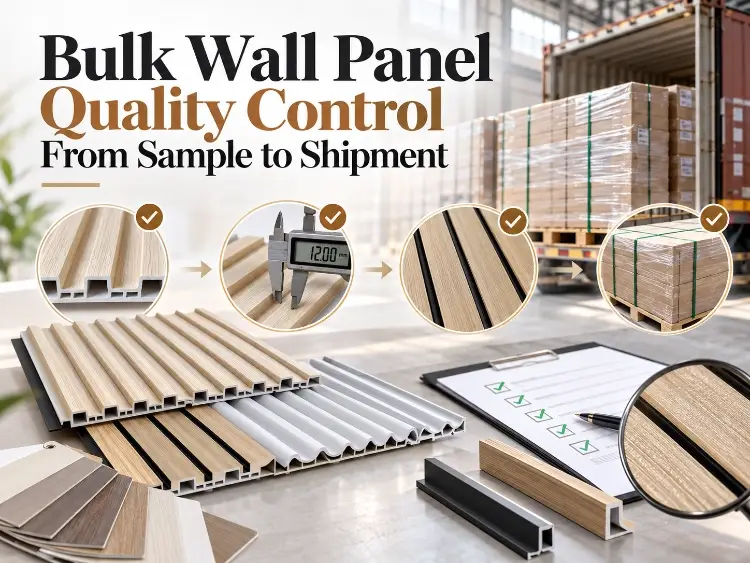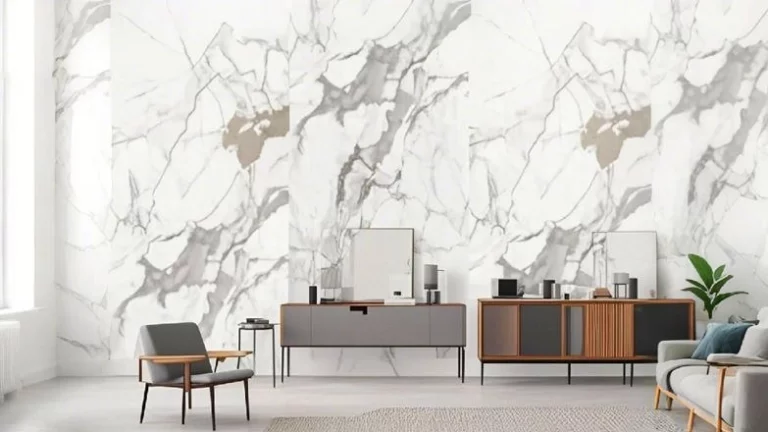
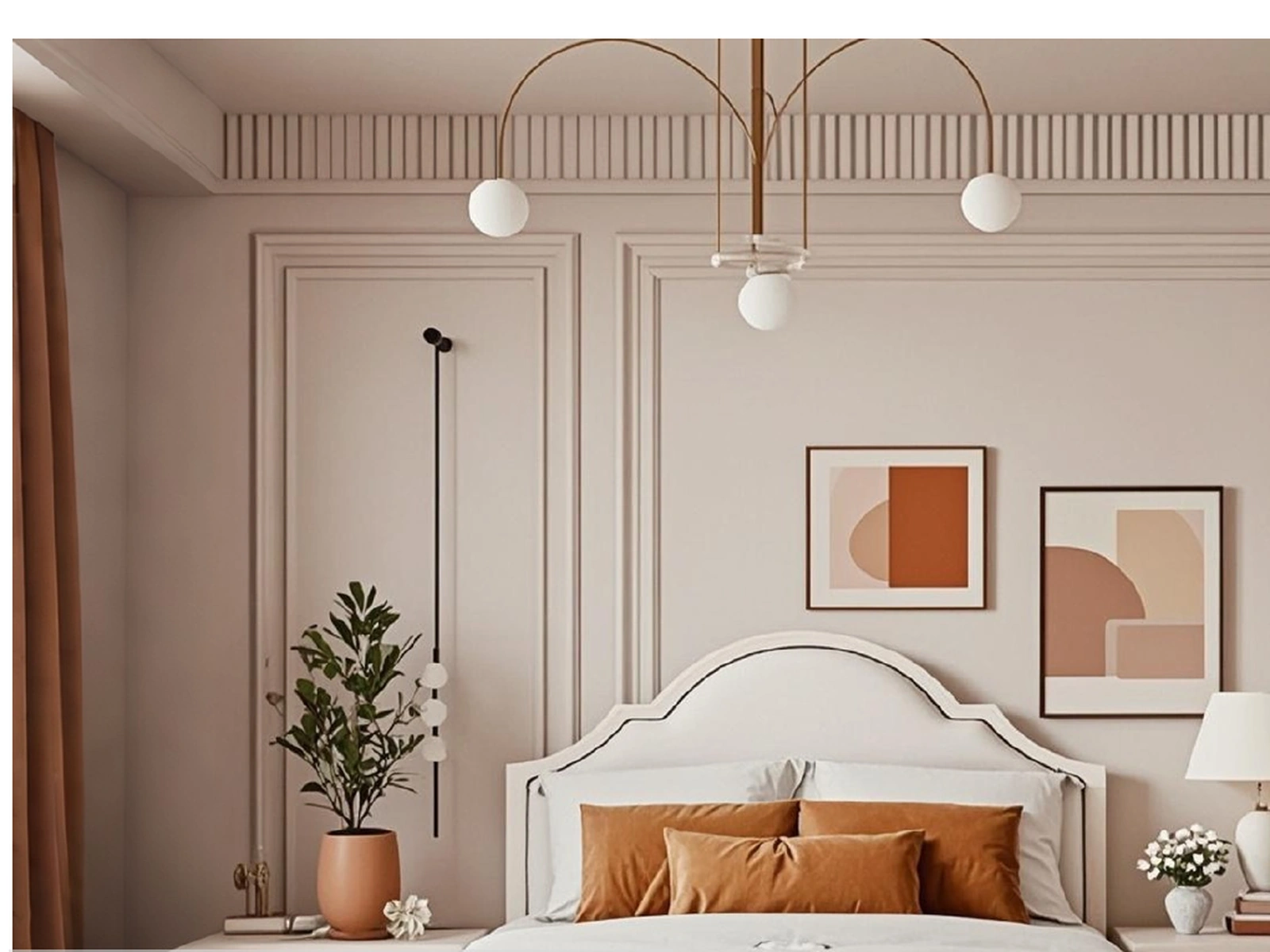
Las molduras arquitectónicas se utilizan para dar un acabado impecable a las superficies interiores, pero no son solo elementos decorativos. En hoteles, apartamentos, oficinas, tiendas y proyectos de renovación, las molduras ayudan a controlar la transición entre techos, paredes, suelos, paneles y aberturas. Permiten definir mejor las esquinas, dividir espacios, ocultar bordes irregulares y ofrecen a los contratistas un método estandarizado para lograr un acabado uniforme en varias habitaciones.
Para los compradores B2B, la verdadera pregunta no es solo qué estilo se ve mejor, sino qué tipo de moldura se ajusta mejor a la posición de instalación, el tamaño del perfil, el material, la paleta de colores, el método de embalaje y la distribución repetitiva de la habitación. Las molduras de techo, las molduras de pared, los zócalos, los reductores y otros perfiles resuelven diferentes problemas en obra.
HUAHONG DECORACIÓN Ofrece perfiles de moldura PS para transiciones de techo, diseños de marcos de pared, acabados de pared y piso, y tratamiento de bordes. Los compradores también pueden revisar la gama más amplia. Moldura Se utiliza cuando un proyecto requiere molduras de techo, molduras de pared, zócalos y perfiles de remate en conjunto.
¿Por qué son importantes las molduras arquitectónicas en los interiores comerciales?
Las molduras arquitectónicas son importantes porque los interiores comerciales se juzgan por los detalles. Unos buenos paneles, pintura o suelos pueden parecer deficientes si la línea del techo, el marco de la pared o el borde del suelo son toscos. Esto se hace más evidente en hoteles y apartamentos, donde el mismo diseño se repite en varias habitaciones.
Las molduras definen las transiciones de la superficie.
La mayoría de las habitaciones presentan varias transiciones de superficie. Las paredes se unen al techo, al suelo, a los paneles de pared a las zonas pintadas y a los huecos de las puertas que dan paso a largos pasillos. Sin molduras adecuadas, estas juntas pueden parecer inacabadas.
La moldura de cornisa se usa generalmente donde la pared se une al techo. La moldura de pared crea marcos o zonas decorativas en paredes lisas. El rodapié cubre la línea entre la pared y el suelo. Los reductores y las molduras de borde ayudan a cubrir los cambios de grosor del material o los bordes expuestos. Para los contratistas, estos detalles reducen el trabajo de retoque y facilitan el acabado uniforme de cada habitación.
Las molduras mejoran los acabados uniformes de las habitaciones.
Una pared lisa puede ser aceptable en una habitación pequeña, pero puede verse vacía en el pasillo de un hotel, un apartamento o una sala de exposiciones. Las molduras aportan ritmo y proporción sin necesidad de reformar la pared. Las molduras de cornisa le dan un acabado más definido al techo, especialmente cerca de la iluminación, las cortinas o los paneles de pared.
Por eso, las molduras arquitectónicas son útiles en las reformas. Mejoran el acabado visible y simplifican la construcción en comparación con la sustitución completa de una pared. Para los compradores que gestionan varias habitaciones, la uniformidad es más importante que una sola muestra atractiva.
Los pedidos al por mayor requieren perfiles prácticos.
La elección del perfil influye en mucho más que la apariencia. También afecta al corte, la instalación, el embalaje, el almacenamiento y la compatibilidad de los pedidos posteriores. Un perfil de moldura puede verse bien en una muestra, pero generar problemas cuando el pedido incluye varios tipos de habitaciones o combinaciones de colores.
Las molduras de poliestireno se utilizan con frecuencia para perfiles decorativos interiores debido a su ligereza y practicidad en proyectos de renovación. Los compradores deben confirmar el ancho, la altura, el largo, el color y la forma del perfil. Una longitud de 2,9 m facilita la planificación del espacio, pero los contratistas deben calcular el desperdicio alrededor de esquinas, puertas, ventanas y tramos cortos de pared.
¿Qué tipos de molduras arquitectónicas se utilizan habitualmente?
La forma más sencilla de comparar molduras arquitectónicas es según su posición de instalación. Una transición de techo requiere un perfil diferente al de un marco de pared. Una unión entre pared y suelo requiere un tratamiento distinto al de una moldura decorativa.
Molduras de techo, tiradores y transiciones de techo
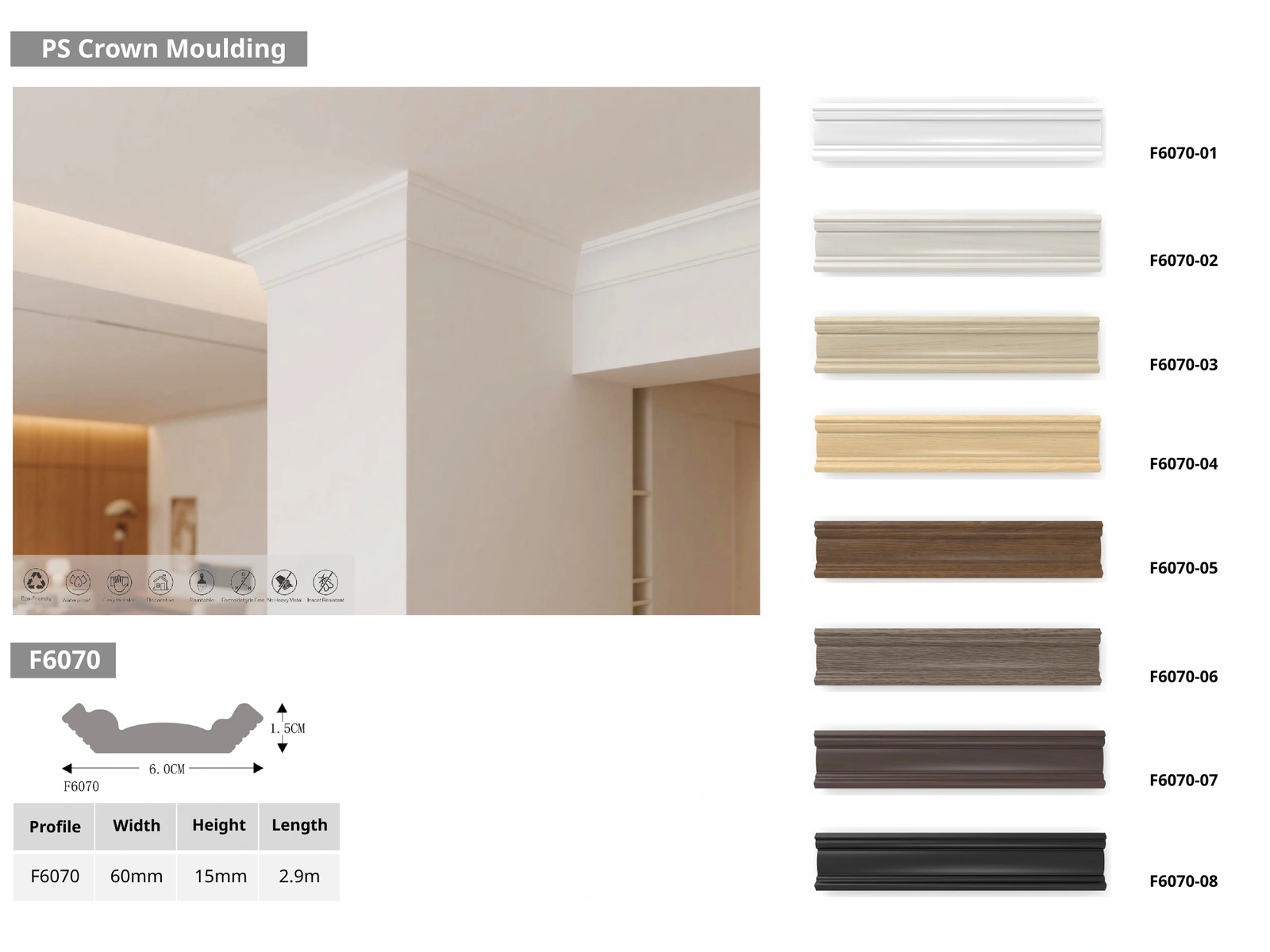
La moldura de techo se instala en la unión de la pared con el techo. Suaviza la esquina superior y aporta una mayor sensación de armonía a la habitación. En habitaciones de hotel, apartamentos con servicios, villas, restaurantes y recepciones, la moldura de techo puede añadir un toque final elegante sin sobrecargar el diseño de la pared.
HUAHONG DECOR PS Moldado de corona La línea puede servir de soporte para las zonas de transición del techo. El perfil F6070 del catálogo de productos tiene 60 mm de ancho, 15 mm de alto y 2,9 m de largo. Antes de realizar un pedido al por mayor de molduras de cornisa PS, los compradores deben confirmar la altura del techo, la disposición de las esquinas, la posición de la iluminación, los detalles de la caja de cortina y si se utilizará el mismo perfil en todas las habitaciones.
Las molduras de pared crean marcos y zonas decorativas.
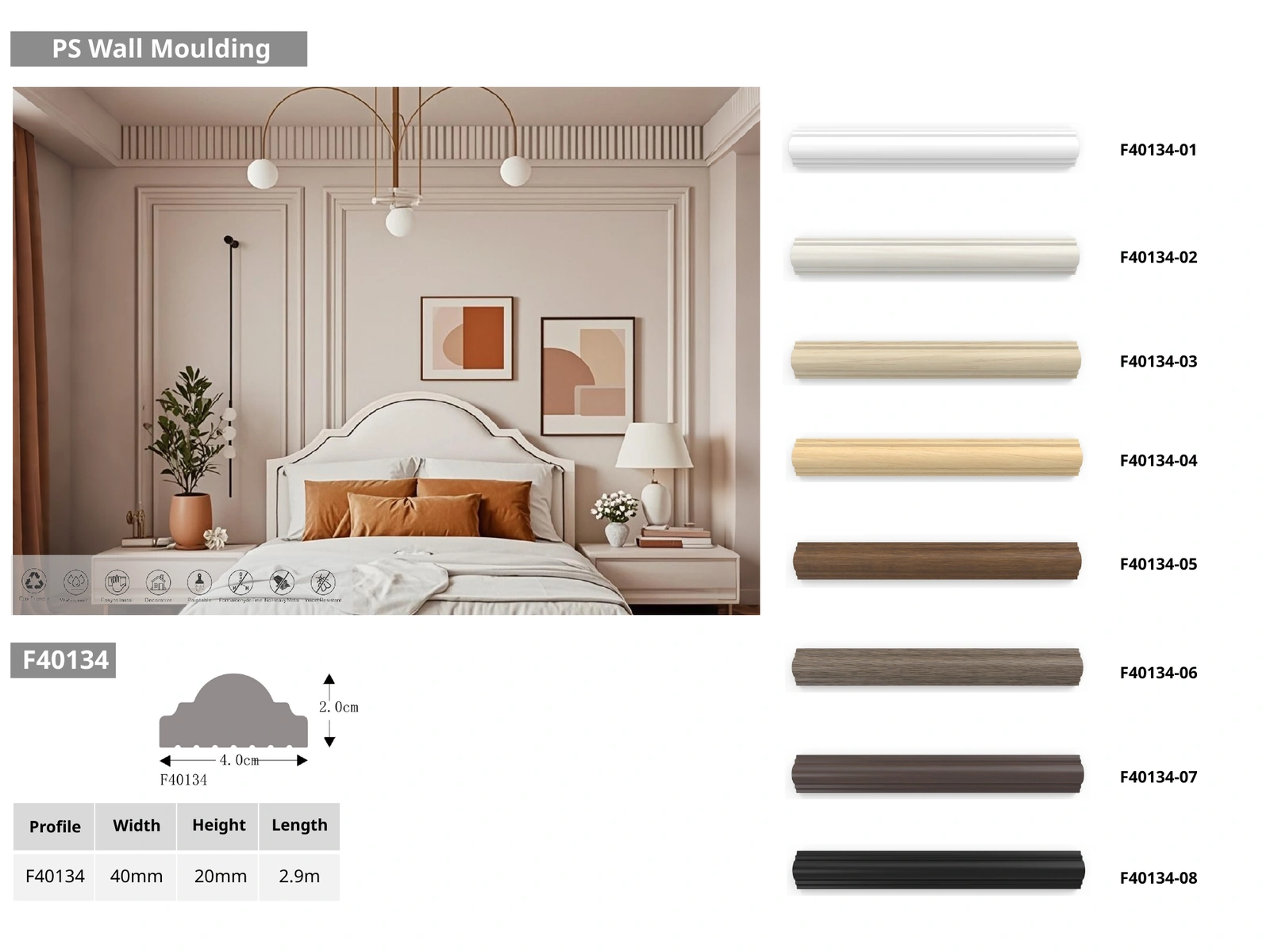
Las molduras de pared se utilizan directamente sobre la superficie de la pared. Permiten crear diseños tipo marco, bordes decorativos, ritmos en los pasillos o líneas decorativas alrededor de las zonas de mobiliario. En comparación con los paneles de pared completos, las molduras ofrecen mayor flexibilidad, ya que se pueden colocar según la distribución de la pared.
HUAHONG DECOR Moldado de pared de PS Esta categoría ofrece una opción versátil para diversas aplicaciones en paredes. El perfil F40134 del catálogo tiene un ancho de 40 mm, una altura de 20 mm y una longitud de 2,9 m. Estas dimensiones influyen en la proporción del marco, el diseño del corte y el ritmo de instalación, por lo que deben verificarse antes de realizar el pedido al por mayor.
Acabado de los bordes del rodapié y reductor
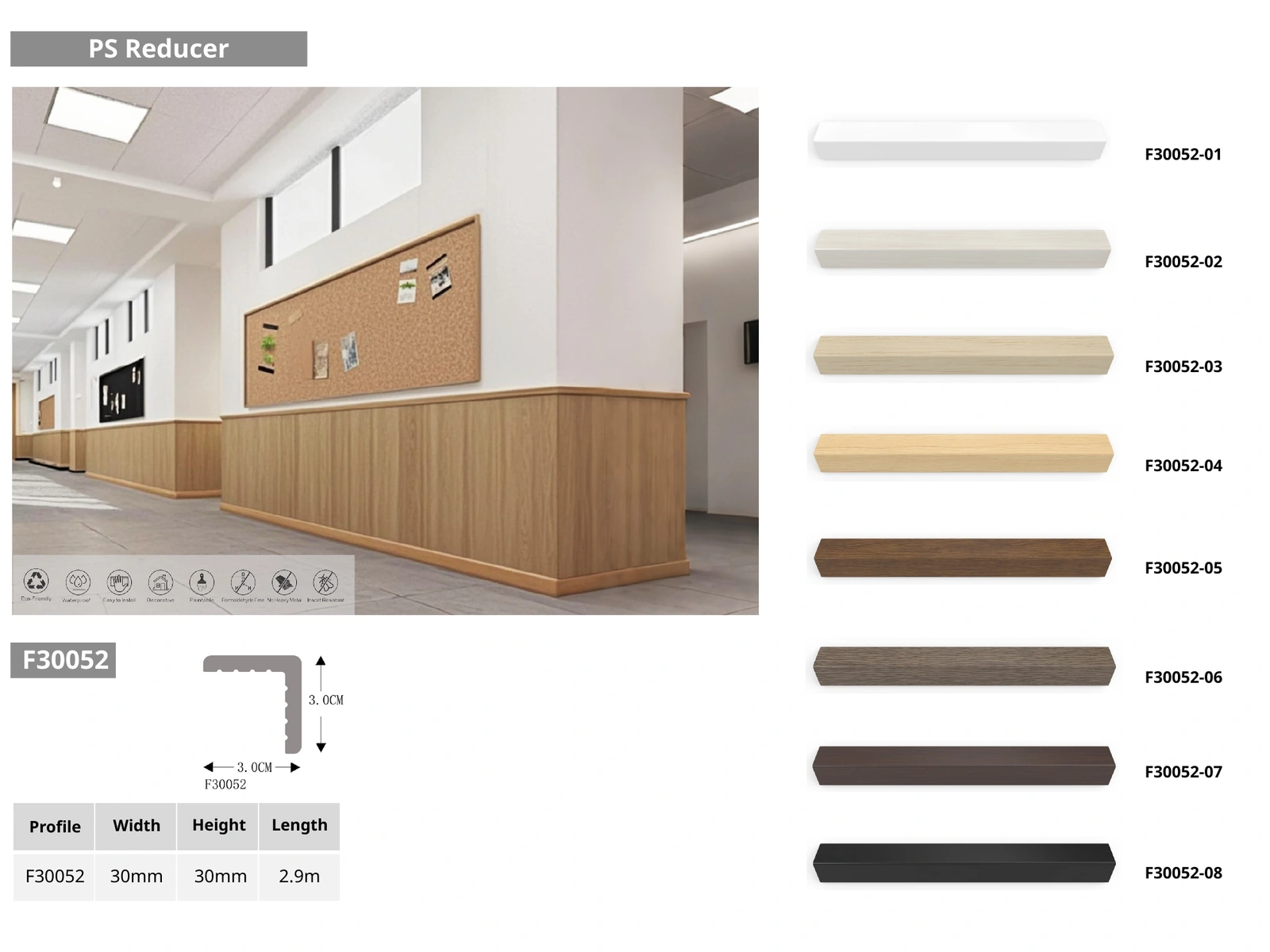
Los zócalos y los perfiles reductores son elementos de soporte dentro de un conjunto completo de molduras. El zócalo cubre la unión entre la pared y el suelo, disimula los bordes inferiores irregulares y ayuda a proteger la parte inferior de la pared. Los perfiles reductores facilitan una transición más limpia entre el suelo, un panel o un borde.
HUAHONG DECOR Sistemas de control de calidad Tiene 80 mm de ancho, 15 mm de alto y 2,9 m de largo. El reductor PS F30052 tiene 30 mm de ancho, 30 mm de alto y 2,9 m de largo. Sirven como complemento para molduras de techo y pared, completando los acabados de la parte inferior de la pared y los bordes de un proyecto.
¿Cómo deben los compradores elegir el tipo de moldura adecuado para cada área del proyecto?
Elegir molduras arquitectónicas basándose únicamente en el nombre del producto es arriesgado. El mismo perfil puede verse equilibrado en una habitación con techos altos, pero demasiado recargado en una habitación de invitados pequeña. Los compradores deben elegir la moldura adecuada según la superficie de la pared, la altura del techo, la longitud del pasillo y la función de la habitación.
Los techos altos requieren líneas de cornisa equilibradas.
La altura del techo influye en el aspecto de las molduras. En una habitación con techo bajo, un perfil de gran tamaño puede dar la sensación de que el techo es aún más bajo. En una habitación con techo alto, una línea muy fina puede pasar desapercibida. Los compradores deben comprobar las muestras cerca del color real de la pared y el techo, no solo bajo la iluminación del almacén.
Los corredores largos necesitan perfiles repetibles.
En los pasillos, los pequeños errores se hacen evidentes. El espaciado irregular, las variaciones en el corte o la falta de coincidencia de color pueden repetirse a lo largo de la pared. Las molduras pueden hacer que los pasillos luzcan menos monótonos, pero la disposición debe planificarse antes de la instalación. Los contratistas deben confirmar la distancia entre marcos, la altura del perfil, el espaciado alrededor de las puertas y el acabado de las esquinas.
Las paredes decorativas necesitan un ritmo constante.
Las paredes decorativas detrás de las camas, mostradores de recepción, áreas de televisión o zonas de exhibición suelen utilizar molduras para crear un punto focal más definido. Es importante verificar el acabado con los paneles de pared, la pintura, el piso y los tonos del mobiliario. Un plano sencillo ayuda a evitar espacios que se vean demasiado recargados o vacíos.
¿Qué deben comprobar los contratistas antes de realizar pedidos de molduras al por mayor?
Las molduras arquitectónicas a granel requieren más preparación que las pequeñas piezas decorativas. Un contratista puede necesitar el mismo perfil en varias habitaciones, pisos o edificios. Confirmar con anticipación las dimensiones, el color, el embalaje y el diseño de instalación reduce la necesidad de realizar cambios posteriores en la obra.
El tamaño y la longitud del perfil deben confirmarse con anticipación.
El ancho y la altura influyen en el peso visual. La longitud afecta a los planes de corte, el embalaje, el almacenamiento y el transporte. Los perfiles F6070, F40134, F8057 y F30052 de HUAHONG DECOR tienen una longitud de 2,9 m, lo que facilita a los compradores la planificación de instalaciones interiores repetidas.
Una buena solicitud de cotización debe incluir planos de la habitación, longitud de las paredes, altura del techo, tipo de perfil preferido, requisitos de color y cantidad estimada. Esto proporciona al proveedor información suficiente para analizar una combinación de molduras adecuada, en lugar de cotizar un solo perfil sin el contexto del proyecto.
Las muestras deben compararse con otros materiales.
Se debe comparar una muestra de moldura con la superficie de la pared, el color del techo, el suelo y la iluminación. Esto es especialmente importante para las molduras de pared y las cornisas, ya que crean sombras. Si varios instaladores subcontratados participan en el proyecto, los perfiles más sencillos y repetibles pueden reducir las variaciones en la obra.
El embalaje y el etiquetado son importantes en el sitio.
Los perfiles largos necesitan protección contra la flexión, los daños superficiales y la confusión entre diferentes modelos. Si se envían varios perfiles juntos, un etiquetado claro ayuda a los contratistas a diferenciar las molduras de techo, las molduras de pared, los zócalos y los reductores. Para proyectos de varias habitaciones, las cajas marcadas por perfil, color o lote pueden ahorrar tiempo de instalación.
| Tipo de moldeo | Posición común del proyecto | Consideraciones clave para los compradores |
| Moldura de techo | Transición pared-techo | Altura del perfil, estilo del techo, coincidencia de esquinas |
| Moldura de pared | Marcos de pared y zonas decorativas | Tamaño del diseño, coincidencia de colores, perfil repetido |
| Pabellón | Revestimiento de paredes y suelos | Altura, coincidencia de suelo, protección de la pared inferior |
| Reductor/moldura de borde | Transición del borde del suelo o del panel | Coincidencia de espesor, dirección de instalación, acabado |
¿Cómo puede HUAHONG DECOR brindar apoyo en el abastecimiento de molduras arquitectónicas?
HUAHONG DECOR puede ayudar en la búsqueda de molduras arquitectónicas ofreciendo familias de perfiles que ayudan a los compradores a crear un paquete de acabado interior más completo. Los compradores que necesiten igualación de productos, análisis de muestras o asistencia en el suministro de proyectos también pueden consultar la empresa. Servicio página antes de enviar una consulta detallada.
Los perfiles PS se adaptan a proyectos de renovación de interiores.
Las molduras arquitectónicas PS son ideales para proyectos de renovación de interiores que requieren perfiles decorativos de tamaño controlado, apariencia uniforme y fácil manejo. El modelo F6070 permite realizar transiciones en techos. El modelo F40134 permite realizar estructuras de pared. Los modelos F8057 y F30052 permiten realizar acabados en la parte inferior de la pared y en los bordes cuando el proyecto requiere un conjunto de molduras más completo.
Para los compradores, la ventaja radica en que los contratistas pueden planificar la habitación como un todo: línea del techo, marco de la pared, borde inferior de la pared y área de transición. Esto facilita la explicación, instalación y reposición del producto.
Los compradores del proyecto deben enviar detalles claros.
El siguiente paso no consiste simplemente en solicitar un catálogo general. Los compradores deben enviar el tipo de habitación, la altura de las paredes, la altura del techo, la longitud de las paredes, la posición del perfil, el color deseado, el material de la superficie, la cantidad estimada, las necesidades de embalaje y el calendario de entrega.
Para contratistas y distribuidores que preparan un pedido de moldeo, Contáctenos Con planos, estimaciones de cantidades y requisitos de acabado. Una consulta más precisa ayuda a seleccionar las molduras arquitectónicas adecuadas para el proyecto antes de que la producción, el embalaje o la entrega en obra se vuelvan urgentes.
Conclusión
Las molduras arquitectónicas contribuyen a que los interiores comerciales luzcan impecables, controlan las transiciones entre superficies y crean detalles de diseño uniformes en hoteles, apartamentos, locales comerciales, oficinas y proyectos de renovación. Las molduras de cornisa, las molduras de pared, los zócalos y los perfiles reductores cumplen diferentes funciones en el proceso de acabado interior.
Para los compradores B2B, la mejor opción comienza con la ubicación de la aplicación, el tamaño del perfil, el material, el color, la disposición, el embalaje y la aprobación de la muestra. Los perfiles de moldura PS de HUAHONG DECOR, incluidos F6070, F40134, F8057 y F30052, ofrecen a contratistas y distribuidores opciones prácticas para crear un paquete completo de molduras interiores. Cuando un proyecto incluye varias habitaciones o distribuciones repetidas, la confirmación temprana del perfil es más segura que resolver los detalles de las molduras en obra.
Preguntas frecuentes
P1: ¿Cuáles son los principales tipos de molduras arquitectónicas que se utilizan en interiores?
A1: Los tipos comunes incluyen molduras de techo, molduras de pared, rodapiés, reductores, rieles para sillas, rieles para cuadros, marcos y otros perfiles de molduras.
P2: ¿Qué tipo de moldura es la más adecuada para las transiciones entre paredes y techos?
A2: La moldura de cornisa se suele utilizar donde la pared se une al techo, especialmente en habitaciones de hotel, pasillos e interiores formales.
P3: ¿Qué deben confirmar los compradores antes de pedir molduras arquitectónicas de poliestireno?
A3: Los compradores deben confirmar el tamaño del perfil, la longitud, el color, la aprobación de la muestra, el embalaje, la cantidad de habitaciones, el diseño de instalación y el cronograma de entrega.