Los paneles de pared acanalados pueden parecer casi idénticos en una foto de producto, pero comportarse de manera muy diferente una vez que cubren una pared completa. El material cambia, al igual que el peso y el mantenimiento. La geometría de las ranuras modifica la sombra, la densidad visual y la limpieza. El ancho del panel afecta las juntas y el desperdicio de corte. Si el control acústico es importante, las líneas decorativas por sí solas no son suficientes.
Por eso la selección debe comenzar con el proyecto, no con la carta de colores. Una pared decorativa de una sala de estar, un pasillo de hotel y una sala de reuniones de una oficina pueden usar líneas verticales, pero no exigen lo mismo del sistema de paneles. Los compradores deben comparar el material, el perfil, las condiciones de la habitación, la instalación, el mantenimiento y el reemplazo en conjunto. Para proyectos que comparan varias familias de materiales, la Gama de paneles de pared HUAHONG DECOR Incluye opciones de PS, WPC, MDF acústico, MDF y SPC, lo que facilita la selección de paneles en función de las necesidades reales de la habitación.
¿Qué deben comparar primero los compradores: el material o el perfil?
La forma más rápida de reducir las opciones es dividir la decisión en dos niveles: material y perfil. El material determina gran parte del comportamiento práctico. El perfil determina la apariencia final de la pared y su integración armoniosa en el diseño.
Una superficie con apariencia de madera no permite saber si el panel es de poliestireno (PS), policarbonato (WPC), MDF u otro material. Un panel estriado de WPC puede ser adecuado para un proyecto que busque una apariencia similar a la madera y un revestimiento interior de bajo mantenimiento. El poliestireno (PS) es ideal para trabajos de renovación decorativos más ligeros. Los sistemas de listones de MDF cobran mayor relevancia cuando la pared también requiere una función acústica.
Dos paneles pueden tener un acabado de nogal similar, pero generar diferentes requisitos de transporte, manipulación, fijación y mantenimiento. Comparar primero el material base evita que una muestra de diseño se convierta en la especificación completa.
El ancho, la profundidad, la forma y el espaciado de las ranuras influyen en algo más que el estilo. Las líneas estrechas y repetidas crean un ritmo más sutil. Las ranuras más anchas o profundas generan sombras más intensas y hacen que la pared destaque más. Los perfiles cuadrados, redondeados o poco profundos también reaccionan de forma diferente a la iluminación lateral.
Siempre revise varios paneles juntos. Una sola tira rara vez muestra la densidad que tendrá el patrón en una pared grande.
No existe un único material ideal para todas las paredes acanaladas. La mejor opción es la que mejor se adapte a la habitación, el método de fijación, la estética, el nivel de mantenimiento y los requisitos funcionales.
¿Qué material se adapta mejor a los diferentes usos de paredes acanaladas?
Paneles acanalados de WPC para una amplia cobertura con apariencia de madera.
Un panel acanalado de WPC es una opción práctica para proyectos que buscan una superficie con apariencia de madera de gran calidad y fácil mantenimiento diario. El modelo WP60002 de HUAHONG DECOR utiliza un perfil acanalado cuadrado de WPC con un ancho de 600 mm y un grosor de 9 mm. Su formato ancho reduce la cantidad de juntas en paredes grandes en comparación con los paneles de tiras estrechas.
El Panel de pared WPC WP60002 Está diseñado para salas de estar, dormitorios, oficinas, hoteles y restaurantes. Para diseños comerciales repetitivos, su cobertura, ritmo de juntas y planificación de la instalación son comparables a los de perfiles más estrechos.
Paneles acanalados de PS para una renovación decorativa ligera.
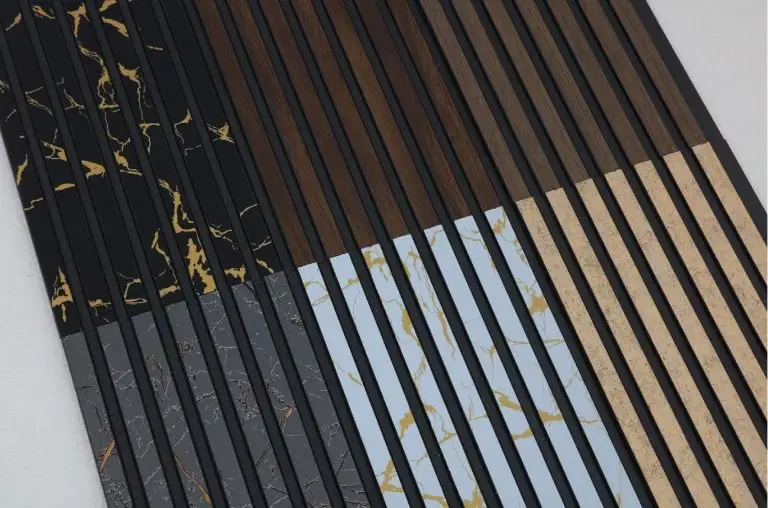
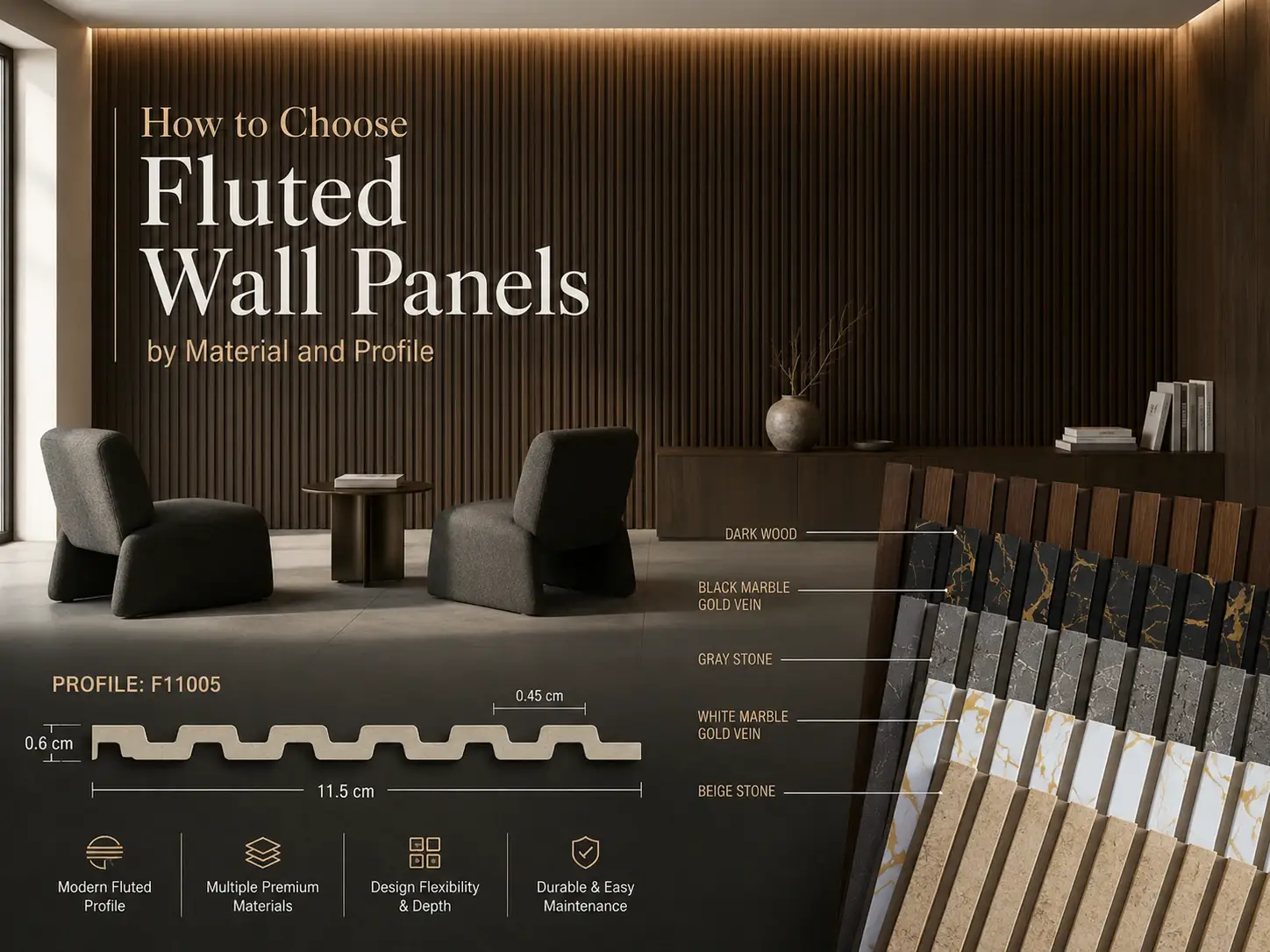
El PS resulta útil cuando se prioriza una solución decorativa ligera y un marcado efecto lineal. El modelo F11005 de HUAHONG DECOR es un panel de pared de PS de 11 cm de ancho con un diseño estriado vertical. Sus acabados incluyen vetas de madera y estilo mármol.
El Panel de pared PS F11005 Resulta útil cuando el diseño requiere un efecto estriado más fino. En trabajos de renovación, se debe comprobar el ancho del perfil en relación con las esquinas, los enchufes, los bordes de los muebles y la longitud final de la pared para que el patrón tenga un acabado limpio.
Paneles acústicos de MDF: Cuando la comodidad acústica importa
Las búsquedas de paneles de pared acanalados de MDF suelen mezclar productos decorativos de MDF con paneles acústicos de lamas. Los compradores deben diferenciar estas necesidades. Un perfil decorativo de MDF puede elegirse principalmente por su apariencia. Un panel acústico de lamas, en cambio, incorpora una capa absorbente y debe considerarse como un sistema de pared funcional.
El modelo SAP009 de HUAHONG DECOR utiliza listones de MDF fijados a una base acústica y está disponible en formatos de 605 × 1200 mm o 605 × 2400 mm, con un grosor de aproximadamente 21 mm. Para oficinas, salas de cine en casa, vestíbulos de hoteles u otros espacios donde el confort acústico es importante, esta construcción resulta más relevante que juzgar los paneles de pared acanalados de MDF únicamente por el patrón de la cara frontal.
El Panel acústico de MDF SAP009 Ofrece a los compradores una referencia directa para comparar paredes lineales decorativas con un sistema de pared acústica.
¿Cómo influyen el diseño, la ubicación y la función en la forma final del muro?
¿Cómo influye el perfil de la ranura en el acabado de la pared?
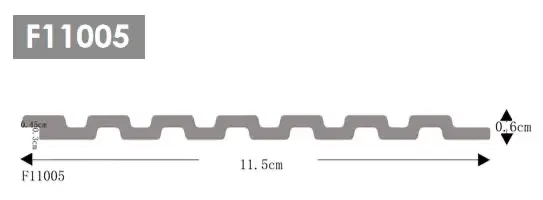
El perfil es donde las muestras atractivas pueden fallar a escala real. Un perfil que se ve refinado en una muestra de mano puede resultar demasiado recargado en un vestíbulo amplio o demasiado débil en una pared comercial alta.
El espaciado estrecho crea más líneas por metro y una textura más fina. El espaciado más amplio hace que cada nervadura sea más visible. Los surcos más profundos aumentan la sombra, especialmente bajo iluminación direccional, mientras que los surcos poco profundos crean una superficie más uniforme.
El modelo F11005 tiene un ancho total de aproximadamente 11 cm, mientras que el WP60002 mide 600 mm de ancho y 9 mm de grosor. Se trata de sistemas visuales diferentes. Uno crea un ritmo de franjas estrechas; el otro cubre una superficie mayor por panel. La elección debe basarse en la escala de la pared, la frecuencia de juntas deseada y la distancia de visualización.
La iluminación lateral acentúa la sombra en el interior de las ranuras, mientras que la iluminación frontal hace que la pared parezca más plana. En salas de exposición, hoteles y proyectos comerciales, se recomienda revisar las muestras con una iluminación similar a la del espacio final.
La limpieza también es importante. Las ranuras profundas y muy juntas crean más bordes donde se acumula el polvo. En las zonas que se limpian con frecuencia, un perfil más sencillo o abierto puede reducir el mantenimiento sin perder la estética vertical del diseño.
¿Dónde queda mejor una pared decorativa con paneles estriados?
Una pared decorativa con paneles acanalados funciona mejor cuando tiene una función visual clara. Cubrir todas las superficies con el mismo patrón de ranuras pronunciadas puede hacer que una habitación se vea recargada visualmente.
Las paredes del salón, los fondos de los sofás, las paredes de los cabeceros de las habitaciones, los comedores y las entradas son lugares ideales para una pared decorativa con paneles estriados. Las líneas verticales pueden hacer que una habitación baja parezca más alta, mientras que un acabado cálido aporta mayor profundidad a una pared grande y lisa.
Para habitaciones pequeñas, una cobertura selectiva suele ser más efectiva que una cobertura total. Una sección estrecha detrás de una consola o cabecero puede crear suficiente textura sin recargar el espacio.
Los proyectos comerciales plantean otras consideraciones: habitaciones repetidas, limpieza general, aberturas en las paredes, uniformidad en los acabados y reemplazo futuro. Un hotel puede valorar la uniformidad en el lote de habitaciones. Un minorista puede priorizar el reemplazo rápido. Una oficina puede necesitar textura visual además de control acústico.
HUAHONG DECOR apoya la selección de materiales, muestras, combinación de acabados y planificación de proyectos a través de su Servicio de desarrollo de paneles de pared, lo que permite a los compradores revisar conjuntamente el perfil, la cantidad, el embalaje y las necesidades de instalación.
¿Mejoran los paneles de pared acanalados la acústica de una habitación?
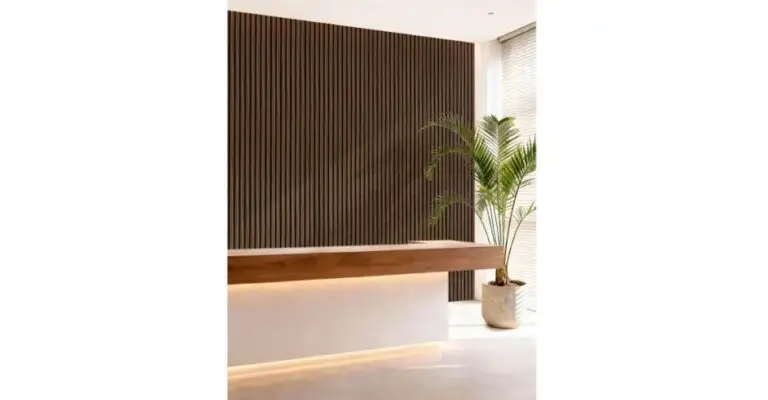
No. El aspecto estriado y la construcción acústica son cosas distintas. Los surcos lineales crean un ritmo visual, pero el rendimiento acústico depende de la acumulación completa de la estructura.
Una ranura decorativa crea relieve, ritmo y sombra. Los perfiles de PS y WPC deben seleccionarse principalmente en función del acabado de la pared, las condiciones de la habitación, la durabilidad, el mantenimiento y la planificación de la instalación.
La forma de una superficie decorativa dura puede modificar las reflexiones del sonido, pero eso por sí solo no convierte el panel en un tratamiento acústico.
Cuando el control acústico es un requisito importante, considere el material de las lamas, el soporte acústico, el método de instalación y la superficie de pared tratada. Los productos acústicos de MDF de HUAHONG DECOR combinan lamas de MDF con una base acústica, ofreciendo a los compradores una opción más clara cuando la comodidad acústica es fundamental.
Por eso, los paneles de pared acanalados de MDF no deben considerarse una categoría genérica. Diseños frontales similares pueden ocultar construcciones y funciones muy diferentes.
¿Qué deben comprobar los compradores antes de finalizar un proyecto?
¿Cómo se deben comparar los precios de los paneles acanalados?
Una comparación de precios útil para paneles acanalados va más allá del precio por pieza. Un precio unitario bajo puede perder su ventaja si el perfil genera más juntas, más desperdicio de corte, un montaje más lento o una sustitución más difícil.
Comience con el ancho, largo, grosor y perfil visible del panel, la superficie total de la pared y el desperdicio previsto. Luego, añada las esquinas, los extremos, las aberturas, los remates y el material sobrante.
Por eso, el precio de los paneles acanalados debe compararse según las mismas especificaciones del proyecto. Un perfil de WPC de 600 mm y una tira de PS de 11 cm no son directamente comparables hasta que se consideren la cobertura, la mano de obra, el desperdicio y el efecto visual deseado en la misma lámina.
La mano de obra para la instalación, el embalaje protector, los accesorios, el volumen de flete, el riesgo de daños y el soporte para pedidos adicionales pueden modificar el costo final del proyecto. Los compradores comerciales también deben confirmar cómo se identificarán los colores y perfiles aprobados para las fases posteriores.
Antes de solicitar un presupuesto, prepare las dimensiones de la pared, el tipo de habitación, el material, la referencia del perfil, el acabado, la cantidad, el estado del sustrato, las necesidades de embalaje y el cronograma de entrega. Los compradores pueden solicitar muestras y un presupuesto del proyecto. HUAHONG DECORACIÓN Con esos detalles, el presupuesto refleja el proyecto real.
¿Qué debe incluir la especificación de un proyecto?
Una buena especificación debe indicar el material, las dimensiones del perfil, la referencia del acabado, la superficie de la pared, la orientación del panel, el método de fijación, los remates, las aberturas, la cantidad de repuestos, el embalaje y el plazo de entrega. Esto proporciona al instalador, al comprador y al proveedor la misma información.
En proyectos residenciales, la escala y el mantenimiento pueden ser factores determinantes. En hoteles y comercios, la repetibilidad y la planificación de reemplazos cobran mayor importancia. En oficinas y espacios multimedia, la construcción acústica puede primar sobre la profundidad del perfil decorativo.
HUAHONG DECOR puede comparar varias familias de paneles de pared en un mismo proceso de selección. El PS satisface las necesidades decorativas ligeras, el WPC admite superficies estriadas con aspecto de madera más amplias y los sistemas acústicos de MDF son adecuados para interiores donde el diseño lineal y el confort acústico deben ir de la mano.
Conclusión
Los paneles de pared acanalados deben elegirse como un sistema integral, no como una simple muestra de textura. Empiece por la habitación y el material, y luego compare el ancho, la profundidad y la separación de las estrías, la cobertura del panel, el mantenimiento, la acústica, la instalación y el costo total del proyecto. Una buena elección seguirá funcionando incluso después de encender la iluminación, cubrir completamente la pared y comenzar el uso diario del espacio.
Para compradores de proyectos, distribuidores y contratistas, los planos, las muestras, las dimensiones reales y las condiciones de uso hacen que la lista de candidatos sea más fiable. HUAHONG DECOR puede respaldar este proceso con opciones de paneles de pared de PS, WPC y acústicos, transformando una referencia visual en una especificación y un presupuesto más precisos.
Preguntas frecuentes
P1: ¿Son mejores los paneles de pared acanalados de WPC o PS para una pared decorativa?
A1: Ambas opciones pueden funcionar bien, pero se adaptan a prioridades diferentes. El WPC es útil para superficies con apariencia de madera más amplias e interiores de bajo mantenimiento, mientras que el PS es ideal para renovaciones decorativas ligeras y perfiles de listones más finos. Compare el tamaño de la pared, el ritmo del perfil, la manipulación y el mantenimiento antes de elegir.
P2: ¿Los paneles de pared acanalados mejoran la acústica de la habitación?
A2: Los paneles decorativos acanalados crean relieve en la superficie, pero el rendimiento acústico depende de la construcción integral del panel. Si se requiere control del sonido, elija un sistema con un revestimiento acústico en lugar de confiar únicamente en el patrón de ranuras.
P3: ¿Cómo debo comparar los precios de los paneles acanalados entre diferentes proveedores?
A3: Compare la cobertura útil, las dimensiones del perfil, el material, el acabado, el desperdicio, los remates, la mano de obra, el embalaje, el flete y el soporte para pedidos repetidos. El precio unitario del panel acanalado solo es útil después de que los proveedores hayan cotizado para los mismos requisitos del proyecto.