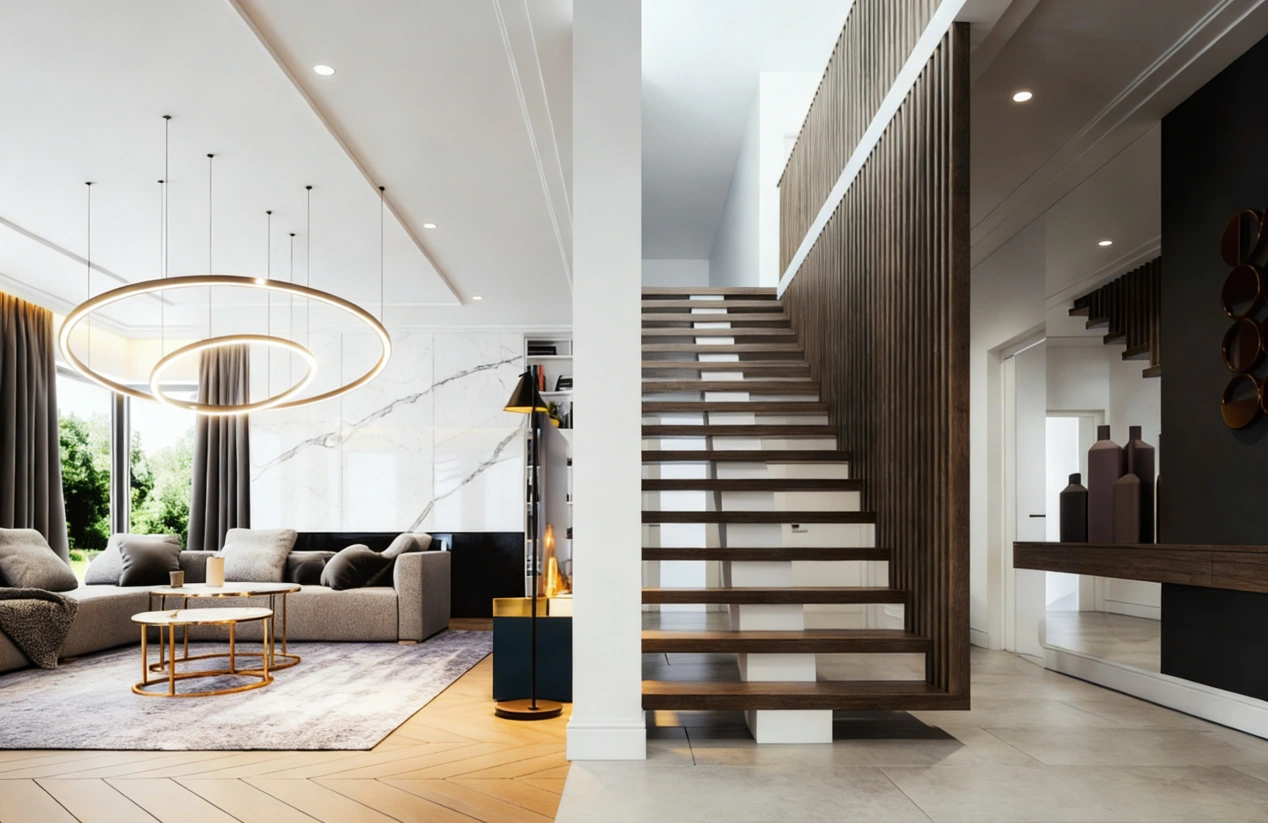
If you have spent any time looking through interior design posts on Instagram or TikTok recently, you have probably seen a big trend: the comeback of old wall features. From large Victorian hallways to smooth modern entryways, homeowners are searching for ways to add personality to the “spine” of their homes—the staircase. While paint is a fast solution, it often fails to cover the marks and dents that come with busy family life. That is why so many people are choosing panelling. However, the main discussion in the renovation world isn’t about color; it is about the material. Should you pick the usual path or consider new engineered options?
Stairs are difficult spots. They face ongoing vibration, shifts in temperature, and direct touch. Selecting the right material is not only about looks; it is a practical choice that impacts how long your home’s interior lasts. In this guide, we will examine why MDF panelling stairs have become the top choice for both skilled installers and homeowners who care about design.
The Structural Stability of MDF in High-Traffic Areas
When we talk about staircases, we point to one of the most used sections in a home. Every climb or descent brings a slight shift in load and push. This regular motion can lead natural substances to swell, contract, or crack as years go by. Here is where the core structure of Medium Density Fibreboard (MDF) really excels over other picks.
Before we check the precise face of these sheets, it helps to understand how their creation copes with strain. Unlike real wood, which includes a texture that might split, MDF is an engineered wood product made by breaking down wood scraps into fine fibers. Then, these strands combine with wax and a resin glue under high heat and pressure. Such a process creates a uniform thickness that stays quite steady.
- Zero Grain Movement: Since MDF lacks a natural grain, it does not warp or twist when the heating comes on in the winter. This is crucial for MDF panelling stairs because the panels need to stay perfectly flush against the wall.
- Impact Resistance: Modern MDF is dense enough to withstand the “kick” of a shoe or the bump of a vacuum cleaner without splintering.
- Smooth Routing: Technical precision is easier to achieve with MDF. You can cut intricate “shaker” styles or “beaded” edges without worrying about the wood crumbling at the corners.
Why Moisture-Resistant MDF is a Game Changer for Hallways
A common wrong idea is that all MDF tends to expand if it gets a little wet. While that might have been correct for the low-cost furniture boards of the 1990s, the field has advanced a lot. Today, expert installers particularly seek Moisture-resistant MDF (often colored green in its basic form) for places like hallways and staircases that are close to outside doors.
Knowing the setting of your staircase is the first move toward a durable setup. Hallways are often “link” areas where cool air from the front door meets the warm air of the living room, which can cause slight wetness on surfaces. If you use regular boards, they might take in this dampness. However, the special resins in MR (Moisture Resistant) boards stop this from occurring.
- Dimensional Stability: Even in wet conditions, Even in wet conditions, Moisture-resistant MDF provides superior dimensional stability and shape retention. This means your connections won’t open up when the weather shifts.
- Better Paint Adhesion: Since these sheets prove less porous than basic MDF, they take up paint in steady patterns.
- Longevity in Damp Climates: For houses near coasts or in wet zones, choosing moisture-resistant items for MDF wall panels stands as the sole method to ensure the trim endures past a handful of years.
Comparing MDF to Solid Wood Panelling for Stairs
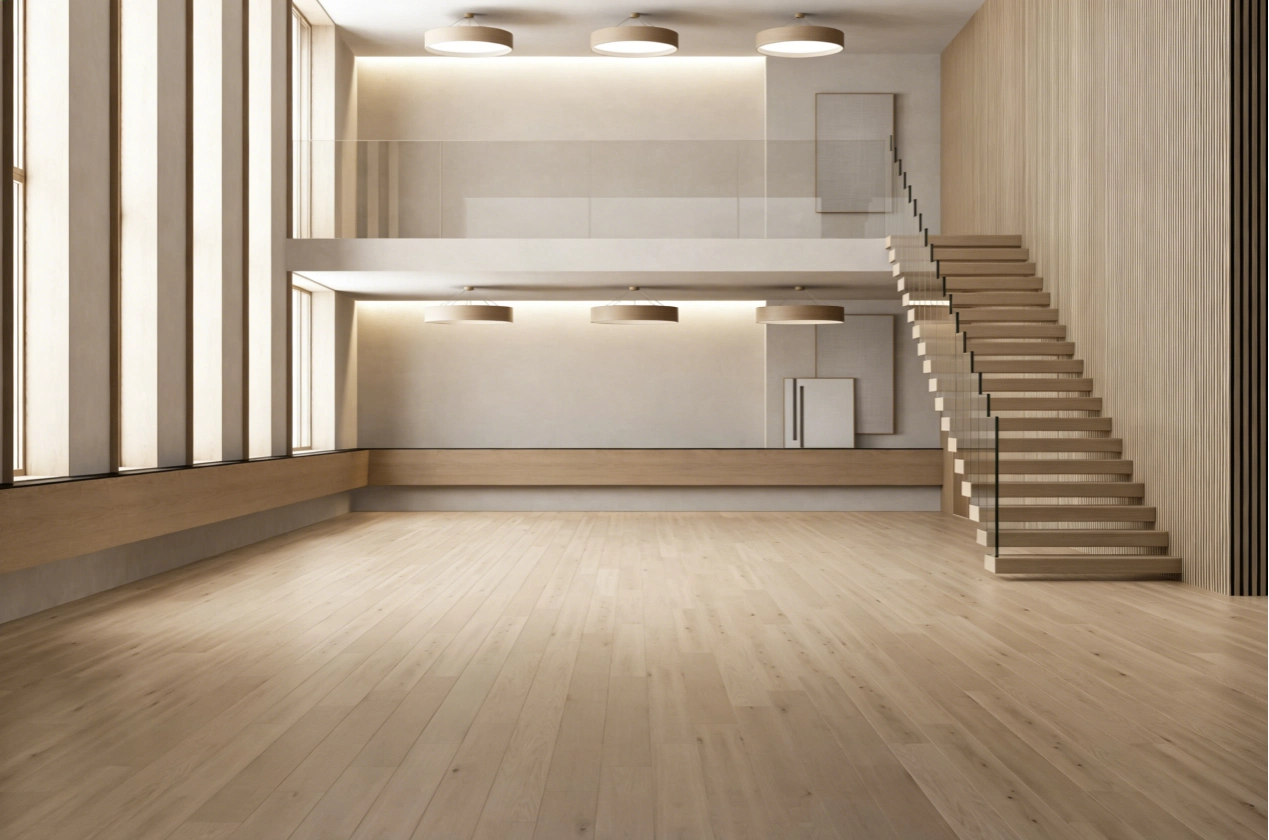
It proves easy to feel attracted to the nice idea of genuine wood. Folks often say solid wood panelling for stairs ranks as the luxury choice. But from a functional and maintenance view, does it actually beat others? Oak or pine seems nice in a basic lodge, yet it creates various setup issues in a present-day, managed house.
Choosing between them hinges on your funds and the hours you plan to spend on care. Solid wood calls for drying, space tuning, and steady moisture watches. When the wood stays too fresh (wet), it shrinks after fitting, resulting in ugly gaps. Now, let us view how these stack up in real numbers.
- Cost Efficiency: On average, MDF panelling stairs are about 50% to 70% cheaper than high-end solid wood. This allows homeowners to spend more on high-quality finishes or lighting.
- Surface Perfection: Solid wood has knots and sap pockets. Over time, these can bleed through the paint, leaving yellow spots. MDF is a “dead” material, meaning there are no tannins to ruin your paint job.
- Installation Speed: Because MDF comes in large, uniform sheets, installers can cover a staircase in half the time it takes to fit individual solid wood slats.
The Role of Environmental Protection Wall Panels in Modern Design
In 2026 and beyond, we cannot discuss building materials without mentioning the earth. Many homeowners worry about the chemicals in engineered woods. However, leading makers like HUAHONG DECOR put a strong focus on producing an environmentally protective wall panel that follows strict safety rules.
The move toward “green” building isn’t just a fashion; it’s a required rule in many places. High-quality MDF is actually a very lasting choice because it uses the wood that would otherwise be thrown away. Instead of cutting down old trees for solid panels, we use the “thinnings” and sawdust from managed forests.
- Formaldehyde Standards: Look for panels rated E1 or E0. These have very low release levels, making them safe for inside use even in hallways with poor air flow.
- Recycled Content: Many MDF wall panels are made from up to 80% recycled wood fibers, which lowers the strain on natural systems.
- Sustainable Sourcing: By choosing an environmentally protective wall panel, you are supporting a circular economy. Products like the HUAHONG DECOR Wall Panels are designed with these eco-standards in mind.
Technical Advantages of PS Wall Panels as an Alternative
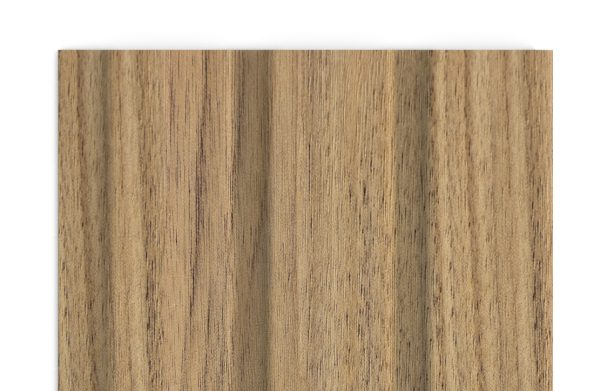
While MDF is the traditional king of panelling, new materials are entering the market that offer even more technical benefits. We have seen a massive surge in interest for PS wall panels. Made from Polystyrene, these panels offer a different set of technical perks that might suit certain staircases better than wood-based products.
If your staircase is particularly prone to heavy moisture—perhaps it leads down to a basement or is right next to a laundry room—you might want to look beyond MDF. PS (Polystyrene) is essentially waterproof. It doesn’t just resist moisture; it ignores it completely.
- Lightweight Engineering: PS panels, such as the PS Wall Panel F16002, are much lighter than MDF. This makes them easier to glue directly to the wall without heavy-duty mechanical fixings.
- Pre-Finished Beauty: Unlike MDF, which requires sanding, priming, and painting, many PS panels come with high-definition textures that mimic wood or marble right out of the box.
- Durability: These panels are incredibly flexible. If your house suffers from minor subsidence or “settling,” a PS panel is more likely to flex than a rigid MDF board, which might snap.
Installation Secrets for a Professional Finish
Installing MDF panelling stairs is a task that rewards care and the correct tools. Because stairs are slanted, you aren’t just working with right-angle corners. You have to figure out the “slope” of the stairs to make sure your panels appear even as they go up. This is where many home projects fail.
Before you put on any glue, you must think about the “scribing” process. This means cutting the bottom of the panels to match the exact shape of your stair steps or baseboard. Because houses are seldom perfectly flat, a 45-degree cut might really need to be 44.5 degrees.
- Preparation: Always let your MDF boards rest in the hallway for 48 hours before setting them up. This allows them to get used to the room’s warmth.
- Adhesive Choice: Use a strong-hold, no-solvent glue. It grabs the panel right away but offers a few minutes to move it into the best spot.
- The “V-Joint” Trick: When connecting two pieces of MDF wall panels on a long stretch up the stairs, lightly angle the edges where they join. This forms a small “V” that seems like a planned design element rather than an unplanned space.
Maintenance: Keeping Your Staircase Looking New
One of the largest practical advantages of MDF panelling stairs is how simple they are to repair. If you mark a solid wood panel, you might need to sand the entire piece and re-color it. With MDF, a little wood filler and a quick brush fix the harm in five minutes.
The surface you select will decide how much effort you need later. Most experts suggest a soft or medium shine for panelling. These bounce enough light to make the hallway feel open, but aren’t so bright that they reveal every hand print.
- Cleaning: A plain wet cloth is all you require. Stay away from strong chemicals, as they can wear down the paint layer over time.
- Durability: A well-placed set of MDF wall panels should hold up for 15 to 20 years without needing big fixes, as long as you started with moisture-resistant MDF.
Conclusion: Making the Right Choice for Your Home
Picking the correct material for your staircase is a mix of facts and style. While solid wood panelling for stairs has its appeal, the practical strengths of MDF panelling for stairs are tough to overlook. From its fight against bending to its earth-friendly qualities as an environmental protection wall panel, MDF offers a steady, attractive, and budget-friendly answer for the current home.
At HUAHONG DECOR, we focus on aiding homeowners and workers to find the ideal match for their exact needs. Whether you are seeking classic MDF types or modern, waterproof PS wall panels, we have the practical knowledge to lead you. Our custom services make sure that your project is not just a change, but an improvement to your home’s worth.
Ready to transform your staircase? Feel free to browse our full collection or contact us today for professional advice on your next project!
FAQs
Q: Is MDF panelling on stairs better than solid wood?
A: Yes, MDF panelling stairs are more stable, cost-effective, and won’t warp or crack like solid wood does over time.
Q: Can I use standard MDF for my hallway wall panels?
A: It’s better to use Moisture-resistant MDF to prevent swelling from humidity or damp coats hanging in the hallway.
Q: Is MDF panelling an environmental protection wall panel option?
A: Yes, high-quality MDF uses recycled wood fibers and meets low-emission standards, making it a sustainable choice for your home.