
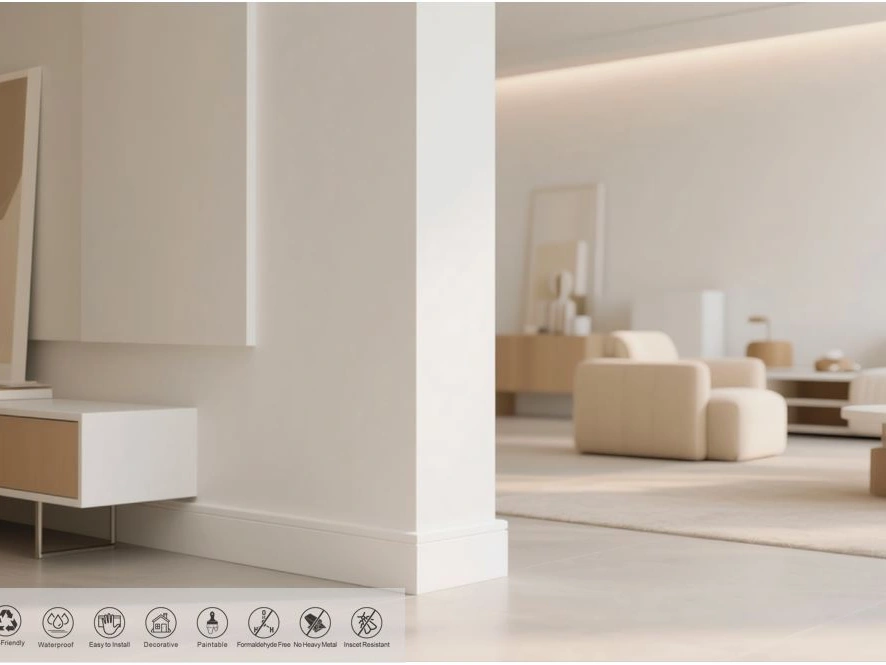
A floor order can look complete when the plank color, thickness, and square meters are confirmed. On site, though, the unfinished details usually decide whether the work looks clean or makeshift. Doorways need transition pieces. Stairs need protected edges. Wall bases need skirting. Long corridors need trims that match the flooring batch instead of fighting it. For contractors and distributors, floor accessories are not small add-ons. They are the parts that keep professional installations moving without awkward gaps, loose edges, or last-minute buying.
HUAHONG DECOR works with project buyers who need interior finishing materials to connect visually and practically. Its moulding collection covers skirting board, floor trim, wall moulding, and related finishing profiles, which gives buyers a stronger starting point when they want one supplier to support the wall, floor, and edge details together.
Why Should Floor Accessories Be Specified Before the Main Flooring Order?
Many flooring quotations begin with the visible surface only. That is understandable, but it leaves too many site decisions for the last week of installation. A contractor may finish the main floor quickly and then lose time because the reducer, end cap, or skirting board was never checked against the actual floor height. When accessories are discussed early, the buyer can confirm color, profile depth, packing, and installation sequence before the shipment leaves the factory.
Late accessory decisions create visible finishing problems
The floor edge is where small measurement differences become obvious. A 2 mm height change may not sound serious on a purchase sheet, but it can leave a shadow line at a doorway or a trip hazard near a corridor. If the accessory profile is chosen after flooring arrives, contractors may need to cut around a mismatch, accept a different color, or wait for replacement pieces. These are exactly the kinds of small delays that disturb handover.
Accessories help different material zones meet cleanly
Professional interiors often combine several materials: SPC flooring in rooms, tile near bathrooms, carpet in offices, and wall panels in public zones. Floor accessories give these materials a controlled meeting point. Instead of leaving installers to rely on ad-hoc silicone fixes or exposed cuts, a matched trim system makes the transition intentional. This is especially useful in hotels, apartments, retail stores, and offices where the same detail repeats across many rooms.
Which Floor Accessories Usually Decide the Finished Detail?
The right accessory depends on the place where the flooring stops, changes direction, or meets another surface. Buyers do not need to overcomplicate the list, but they should know the function of each profile before approving a bulk order. A good floor accessory plan normally covers transitions, exposed ends, stair edges, and the floor-to-wall line.
Reducers manage height changes between floor finishes
A PVC reducer helps one floor level meet another without a harsh step. It is often needed where SPC flooring meets tile, old flooring, or a lower adjacent surface. For project buyers, the key checks are profile slope, width, color match, and how the reducer fixes to the subfloor. If the reducer looks too bulky, it can make a modern floor feel heavy. If it is too narrow, it may not cover the cut edge properly.
T-moulding supports doorways and same-height transitions
PVC T-moulding is more useful when two floor areas are close to the same height. Doorways, room divisions, and expansion breaks are common places for it. Contractors should confirm whether the T-moulding leaves enough expansion gap allowance for the flooring system and whether the visible top strip matches the main finish. For chain renovations, this detail should be repeated consistently so every branch uses the same transition logic.
Stair treads and end caps protect exposed edges
Stairs and exposed floor ends are harder to repair once the project is open to users. A PVC stair tread protects the front edge of each step, while an end cap can close an exposed run beside sliding doors, raised platforms, or built-in furniture. These pieces should be checked with actual site drawings, because stair noses, platform edges, and threshold lines rarely behave the same from one project to another.
Skirting boards finish the wall base and protect the joint
A skirting board hides the floor-to-wall joint, protects the wall base, and gives the room a finished line. It also helps cover slight floor unevenness or panel cutting tolerance at the bottom of the wall. When wall panels are part of the same project, the skirting board should be reviewed together with the wall panel finish, not purchased as a separate standalone trim.
How Should Buyers Match Accessories With Wall Panels and Flooring?
A floor accessory that works technically can still fail visually. Buyers should not rely only on catalog color names. Walnut, oak, grey, white, and black can shift under site lighting, and gloss level can change the whole impression. The safer route is to compare flooring, wall panels, skirting, and transition trims under the lighting conditions that the final room will actually use.
Color approval should include more than one surface
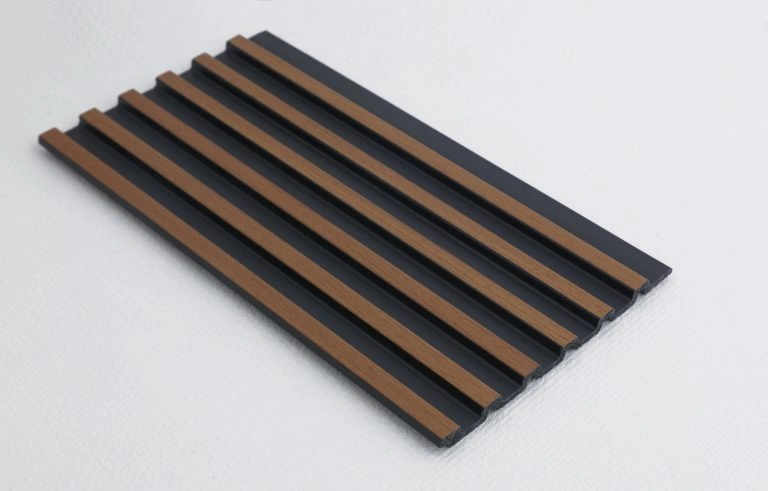
If a project uses decorative wall panels and SPC flooring together, the buyer should ask for a small review set before ordering. A transition strip may match the floor well but look too warm beside the wall panel. A white skirting board may look clean in a sample photo but feel too bright beside cream walls. For repeat projects, distributors should keep approved sample notes so reorders do not depend on memory or phone photos.
Profile size must suit furniture, doors, and cleaning routes
Floor accessories sit where people walk, clean, and move furniture. A tall skirting board can protect the wall, but it may interfere with cabinet bases. A wide threshold can cover movement gaps, but it may look clumsy at a narrow doorway. Contractors should check door clearance, furniture plinths, cleaning machine paths, and the expected traffic level before confirming the profile.
What Should Be Checked Before Bulk Floor Accessory Procurement?
For distributors, one approved sample is not enough. A floor accessory range must be practical to pack, identify, stock, and reorder. Long profiles are susceptible to bending or scratching during transit. Similar colors can be confused in a warehouse. Short accessories may be mixed into the wrong job lot if labeling is weak. Bulk procurement needs a clearer process than a one-time small renovation.
Packing and labeling should prevent site confusion
Long trims need carton protection, model separation, and clear labels. If one order includes PVC reducer, PVC T-moulding, skirting board, stair tread, and end cap pieces, the packing list should be easy for a site manager to understand. Contractors do not want to open ten similar cartons just to find the right doorway trim. Good labeling saves time before installation even starts.
MOQ and reorder plans should fit the sales channel
A project buyer may need one color in a stable volume. A distributor may need several finishes for local trial orders before choosing the best sellers. Before confirming floor accessories, buyers should discuss MOQ, sample lead time, mixed model packing, and future reorder conditions. This is where a flexible supply plan matters more than a one-time low unit price.
How Can HUAHONG DECOR Support Professional Installation Projects?
A better inquiry starts with the project situation, not only a product name. Buyers should send flooring thickness, transition locations, wall panel type, target finish, approximate quantities, packaging needs, and delivery schedule. This helps HUAHONG DECOR suggest whether the project needs a simple skirting board order or a fuller floor accessories plan with reducers, T-moulding, stair treads, and end caps.
Service support should begin before sample approval
Sample approval is the right time to ask installation questions. Buyers can use HUAHONG DECOR service support to discuss material matching, sample review, packaging expectations, and follow-up details. For commercial projects, this early conversation reduces the chance that installers discover missing transition profiles after the main flooring has already been laid.
Contact details should include drawings and room photos
When buyers Contact Us, the most useful files are doorway photos, stair drawings, floor height notes, wall panel references, and the expected order quantity. These details make the quotation more realistic. They also help avoid a situation where the visible floor looks good, but the finishing pieces arrive in the wrong size or color direction.
Conclusion
Floor accessories decide whether a professional installation looks complete after the main flooring is installed. Reducers manage height changes, PVC T-moulding controls same-level transitions, stair treads and end caps protect exposed edges, and skirting boards finish the wall base. For contractors and distributors, these parts should be specified before bulk ordering, checked with real flooring and wall samples, and packed clearly for site use. HUAHONG DECOR gives project buyers a practical place to coordinate moulding, skirting, and floor accessory discussions before the next installation schedule is locked.
FAQs
Q1: What floor accessories should be checked before a commercial flooring order?
A1: Buyers should check reducers, PVC T-moulding, stair treads, end caps, skirting boards, color matching, profile height, packing, and reorder plans.
Q2: Why is PVC T-moulding important in professional installations?
A2: PVC T-moulding helps connect same-height flooring areas, especially at doorways, room divisions, and expansion breaks where a neat transition is needed.
Q3: Should floor accessories match wall panels as well as flooring?
A3: Yes. In commercial interiors, skirting boards and transition trims are seen beside floors, walls, doors, and furniture, so samples should be reviewed together.